
Direct answer: Use this bubble pouches guide to protect small products, parts, accessories, and delicate items inside mailers or shipping boxes.
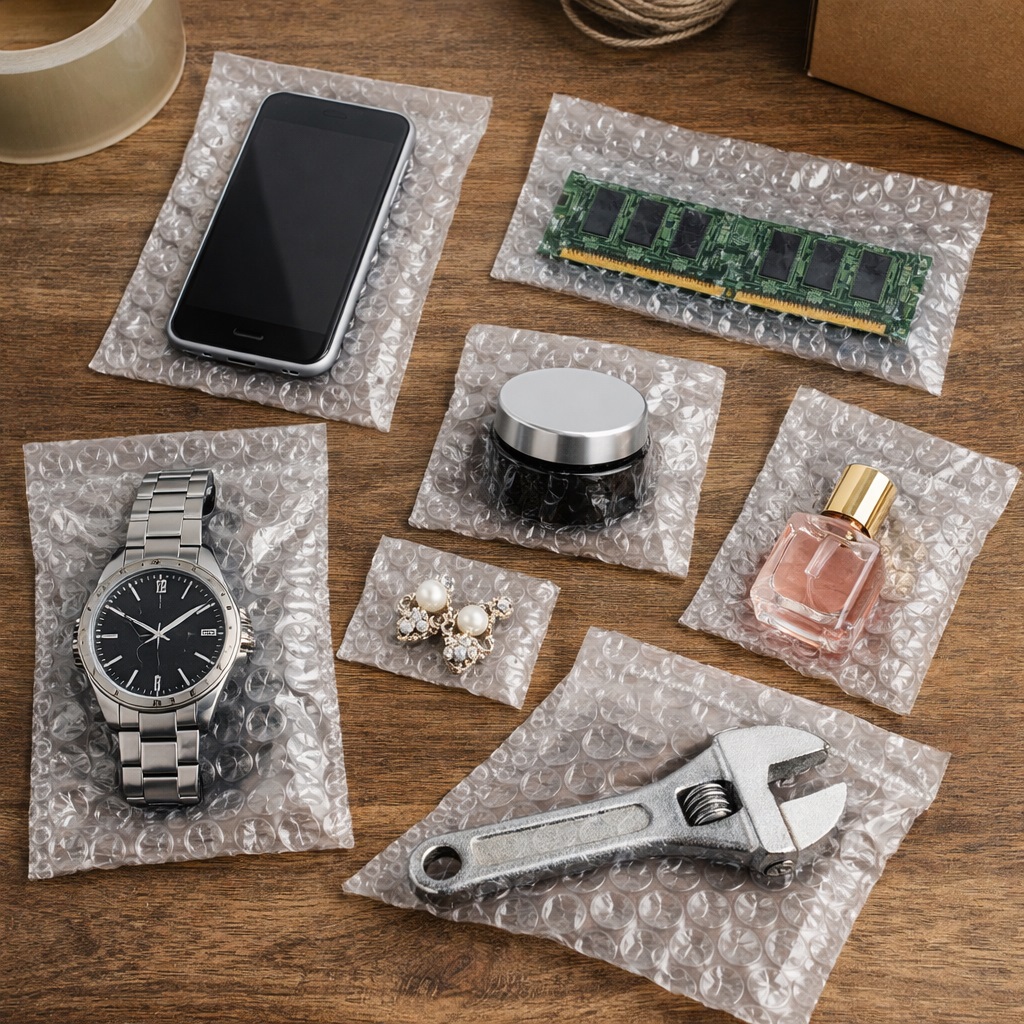
bubble pouches guide help ecommerce sellers match protection, speed, and presentation without overpacking every order. This guide explains where bubble pouches guide fit best and how to make the choice repeatable at a busy packing table.
The right packaging choice should protect the item, keep shipping weight reasonable, and make the delivery look intentional. Therefore, each recommendation below focuses on product fit, shipping risk, workflow speed, and customer experience.
bubble pouches guide quick checklist
- Use bubble pouches for small items that need surface cushion.
- Choose a pouch that closes without squeezing the product.
- Use pouches inside boxes or mailers for added protection.
- Separate items that can scratch each other.
- Keep pouch openings easy for packers to seal.
- Move fragile heavy items to a stronger package.
When to use bubble pouches guide
Use bubble pouches guide when the product matches the protection level and shape of the package. Start with the item dimensions after folding, wrapping, or bundling. Then choose the smallest safe option that still closes cleanly and leaves room for labels or sealing.
If the product can bend, crush, leak, scratch, or shift, add support or move to a stronger packaging style. A small upgrade in protection is usually less expensive than a replacement order, a refund, or a poor review.
bubble pouches guide comparison chart
| Packing situation | Recommended move | Why it helps |
| Small part | Use a close-fit bubble pouch | Protects surface and edges |
| Accessory bundle | Use separate pouches if items rub | Reduces scratches |
| Boxed order | Use bubble pouch as inner protection | Adds cushion without loose fill |
| Sharp item | Wrap edges before pouching | Helps prevent punctures |
How to choose the right size
Measure the product at its packed size, not just its catalog size. Include folds, inserts, protective layers, and any product bundle. Then compare that measurement to the inside usable space of the package.
A package that is too tight can tear, crease, or put stress on seams. A package that is too large can allow the item to move around and may increase shipping cost. The best size gives the order enough room to close without extra empty space.
Packing workflow tips
- Store pouch sizes in labeled bins.
- Match pouch size to product groups.
- Seal pouches before placing inside outer packaging.
- Avoid forcing oversized items into small pouches.
- Document final pouch size for repeat orders.
Common mistakes to avoid
Avoid choosing packaging by habit alone. A product that shipped well once may need a different package when quantity, destination, or carrier changes. Also avoid covering seams, closures, or warning text with labels.
Another common mistake is ignoring repeat orders. Once a package choice works, save the rule in your packing notes so the next order can be packed the same way. This helps teams move faster and keeps customer deliveries consistent.
Why sellers choose ValueMailers
ValueMailers supplies packaging materials for ecommerce sellers, warehouses, offices, and small businesses that need dependable shipping supplies in practical quantities. The goal is simple: choose the right package, pack faster, and send orders with confidence.
Use this bubble pouches guide page as a starting point for your packing rules. Then adjust the final choice based on product weight, fragility, presentation needs, and carrier requirements.