AI ecommerce packaging is moving from buzzword to boardroom priority. In 2026, online sellers are not only asking which box or mailer fits an order. They are asking how data, automation, and artificial intelligence can help every shipment move faster, cost less, and arrive in better condition.
In addition, For ecommerce brands, marketplaces, warehouse teams, and small businesses, packaging has become a profit lever. A package that is too large can trigger higher dimensional weight charges. Meanwhile, extra weight can push an order into a more expensive shipping tier. Poor protection can also increase replacement costs, support tickets, and unhappy reviews. AI is entering that pressure point with a simple promise: use better data to make better packaging decisions before the label prints.
As a result, This does not mean every seller needs a fully automated warehouse or a robotics budget. The shift is broader and more practical. AI is helping teams compare bubble mailers, poly mailers, corrugated boxes, and other shipping supplies with more precision. It is also helping sellers forecast demand, reduce void fill, choose lighter materials, and spot packaging waste that once felt invisible.
For example, The result is one of the most important ecommerce packaging trends of 2026: smarter fulfillment built around right-sized, lightweight, data-informed packaging.
AI ecommerce packaging gives teams a common language for cost, speed, protection, and sustainability. Instead of treating packaging as an afterthought, sellers can connect package choice to measurable fulfillment performance.
Why AI Is Moving Into Ecommerce Packaging
To start, AI is changing ecommerce operations because ecommerce has become more complex. A small online store may sell through its own website, Amazon, eBay, Etsy, Walmart Marketplace, TikTok Shop, and wholesale channels at the same time. Each channel may have different expectations for speed, tracking, packaging quality, and customer experience.
Shipping Pressure Is Raising the Stakes
At the same time, shipping costs keep pressuring margins. Carriers increasingly price packages using a mix of weight, dimensions, destination, service level, surcharges, and operational requirements. USPS explains that large lightweight packages can be charged by dimensional weight or oversized pricing depending on service and package characteristics. Sellers can review the official USPS guidance on parcel size, weight, and fee standards for more detail.
Meanwhile, That environment rewards precision. AI systems can analyze order history, package dimensions, product sizes, damage rates, carrier fees, and warehouse behavior faster than a human team can do manually. Instead of guessing which packaging type works best, sellers can begin building packaging rules around real patterns.
What AI Can See That Humans Often Miss
- Products that are frequently shipped in boxes larger than needed
- SKUs that could move from cartons to VM2 bubble mailers
- Orders that trigger dimensional weight because of package size
- Fulfillment stations that use more void fill than others
- Seasonal spikes in certain mailer sizes or box styles
- Product combinations that need stronger cushioning
- Items that can safely ship in lightweight packaging
However, In other words, AI ecommerce packaging is not only about design. It is about operational visibility.
AI-Driven Packaging Optimization: What It Actually Means
Therefore, AI packaging optimization means using data and intelligent systems to recommend the best packaging option for a product or order. The goal is usually to reduce cost, improve speed, protect the product, and support a better customer experience.
From Static Rules to Smarter Recommendations
In practice, A basic packaging rule might say: ship all small soft goods in a poly mailer. An AI-assisted rule can go further. It may consider the product dimensions, item fragility, destination, carrier service, return rate, customer complaint history, previous damage claims, and whether the item is being shipped alone or with another product.
At the same time, That creates a smarter recommendation. For example, AI may suggest a poly mailer for apparel, a padded bubble mailer for a small accessory, a compact white mailer box for a giftable item, or a sturdy corrugated shipping box for heavier goods.
Traditional Packaging vs AI-Optimized Packaging
| Packaging Decision | Traditional Approach | AI-Optimized Approach |
|---|---|---|
| Mailer or box choice | Based on habit or picker judgment | Based on SKU data, dimensions, weight, and damage history |
| Package size | Closest available size at the station | Recommended right-sized package before packing starts |
| Void fill | Added manually as needed | Reduced by matching product to tighter packaging |
| Shipping cost | Reviewed after invoices arrive | Estimated before label purchase and package selection |
| Packaging inventory | Reordered from static usage history | Forecasted from sales, seasonality, and order mix |
Reducing Shipping Costs With AI
Because of that, Shipping cost reduction is one of the biggest reasons ecommerce teams are studying AI fulfillment technology. A small packaging change can affect thousands of shipments over a year. When a seller ships high volume, even a modest reduction in package size, package weight, or packing labor can matter.
For example, AI can help identify orders where a box is unnecessary. It can also point out when a product ships better in a padded mailer, a flat mailer, a rigid mailer, or a smaller carton. For lightweight items, switching from a box to a mailer may reduce weight and eliminate extra void fill. However, fragile items may need a compact box with a protective insert.
The Best Package Depends on the Order
In practice, one packaging type does not win every time. Instead, AI can help ecommerce sellers match the right package to the right order.
Where AI Can Reduce Wasteful Shipping Spend
- Dimensional weight exposure: AI can flag oversized cartons before they ship.
- Excess material: AI can recommend smaller boxes, bubble mailers, or poly mailers for eligible orders.
- Labor time: Better defaults reduce time spent deciding how to pack each item.
- Damage costs: Data can help identify when cheaper packaging creates higher replacement costs.
- Inventory planning: Forecasting can reduce emergency supply purchases.
For many sellers, AI ecommerce packaging is most valuable when it prevents a too-large carton from becoming a hidden shipping expense.
AI and Dimensional Weight Reduction
Looking ahead, Dimensional weight pricing changed the way sellers think about packaging. A box can be light but still expensive if it takes up too much space in a carrier network. That is why right-sizing packaging matters so much.
As a result, AI shipping optimization software can compare product dimensions against packaging options and suggest a smaller container before an employee reaches for the closest box. In practical terms, that may mean recommending white corrugated mailers for presentation-ready shipments, record mailers for flat media products, or lightweight mailers for durable small goods.
| Order Type | Old Packaging Habit | AI Recommendation | Potential Benefit |
|---|---|---|---|
| Small accessory | Small carton with void fill | Padded bubble mailer | Lower weight and faster packing |
| Soft apparel item | Box or oversized pouch | Right-sized poly mailer | Less empty space |
| Book or media item | Generic box | Record mailer or bookfold-style packaging | Better fit and cleaner presentation |
| Giftable product | Plain shipping carton | White corrugated mailer | Better unboxing experience |
| Fragile item | Cheapest available package | Protective box plus cushioning | Lower damage risk |
Smarter Box and Mailer Selection
In addition, One of the most practical uses of artificial intelligence packaging systems is automated package selection. Instead of asking a packer to remember every rule, the fulfillment system can recommend a package based on SKU, dimensions, order quantity, and shipping method.
For example, an AI-assisted system may learn that a certain cosmetic set performs well in a small bubble mailer, while a different skincare bottle needs a corrugated box because of leakage risk or customer complaints. It may also learn that certain bundles should move to a larger mailer size, while single-unit orders should stay in a smaller format.
As a result, For ValueMailers customers, this is where a well-organized packaging mix becomes powerful. A seller can keep common mailers, bubble mailer sizes, poly bags, fold-together boxes, and cartons available, then let data guide which option is best for each shipment.
Bubble Mailers vs Boxes for Ecommerce
However, AI will not eliminate the debate between mailers and boxes. It will make the decision more specific. The best packaging depends on product shape, weight, fragility, branding goals, carrier method, and customer expectations.
| Packaging Type | Best For | Strength | AI May Recommend When |
|---|---|---|---|
| Bubble mailers | Small items needing cushioning | Lightweight protection | The item is compact, non-crushable, and benefits from padding |
| Poly mailers | Soft goods and apparel | Low weight and flexible packing | The product does not need rigid structure |
| Corrugated boxes | Heavier or fragile goods | Stacking strength and structure | The product needs crush resistance or multiple items ship together |
| White corrugated mailers | Presentation shipments | Protection plus cleaner appearance | The shipment needs a better unboxing experience |
| Record mailers | Vinyl, flat media, documents | Flat-format protection | The item should not slide inside a deep carton |
AI Packaging Design Simulation
Meanwhile, AI packaging design is also expanding beyond fulfillment rules. Brands and packaging teams can use digital simulation to test package concepts before ordering large quantities. A system may model how a product fits inside a box, how much empty space remains, how different insert styles affect protection, or how changing materials changes weight.
Faster Testing Before Buying Supplies
For example, For larger companies, this can mean fewer physical prototypes and faster packaging development cycles. For small businesses, it can mean better decisions when choosing standard packaging sizes. Instead of buying too many supplies and learning through trial and error, sellers can narrow the options faster.
Meanwhile, This is especially valuable for ecommerce brands that carry many small products. Jewelry, cosmetics, electronics accessories, trading cards, books, handmade goods, and replacement parts all have different packaging needs. AI can help create packaging rules by product family, not just by warehouse habit.
Inside busy operations, AI ecommerce packaging can turn repeat packing decisions into consistent rules that help new and experienced team members work from the same playbook.
Warehouse Automation and Fulfillment Efficiency
In addition, AI warehouse optimization is not only about robots moving through aisles. It includes better slotting, pick paths, packing station setup, cartonization, labor forecasting, and packaging replenishment. McKinsey has reported on how AI and digital systems are reshaping logistics, supply chain decisions, and real-time operations, including improvements in productivity and decision speed. Their article on AI in logistics and freight is a useful reference for the larger trend.
Packaging Is the Final Cost Checkpoint
However, For ecommerce fulfillment, packaging sits near the end of the workflow, but it affects everything after it. When the packer uses the wrong carton, the shipment may cost more. Slow package assembly can also hold back the warehouse. Finally, product damage creates another shipment, another customer service touch, and another cost.
How AI Improves Packing Speed
- It recommends the package before the item reaches the station.
- The system reduces manual decision-making for repeat SKUs.
- Teams can group orders by packaging type for batch efficiency.
- Forecasting helps show when certain mailer sizes will run low.
- Unusual orders can still be flagged for human review.
AI, Sustainability, and Packaging Waste
Therefore, Sustainability pressure is another reason AI and smart packaging design are converging. Customers notice oversized packaging. Brands notice material costs. Warehouses notice storage space. Carriers notice cube utilization. The EPA’s guidance on sustainable packaging connects packaging choices to broader materials management and life-cycle thinking.
Therefore, AI can support more sustainable packaging by helping sellers reduce unnecessary material. That may include choosing smaller boxes, using fewer fillers, switching some eligible orders to lightweight shipping mailers, or planning packaging purchases with less waste.
Still, sustainable packaging is not only about using less. A package that fails and causes a reshipment creates waste too. Smart packaging decisions balance material reduction with product protection.
| Waste Problem | AI Packaging Response | Business Benefit |
|---|---|---|
| Oversized boxes | Recommend right-sized cartons or mailers | Less void fill and lower dimensional weight exposure |
| Too many package types | Analyze order history to simplify packaging mix | Easier purchasing and faster packing |
| High damage rates | Identify SKUs needing stronger protection | Fewer reshipments and returns |
| Emergency supply orders | Forecast packaging demand | Better buying and fewer rush costs |
As order volume changes, AI ecommerce packaging can help buyers understand which mailers, boxes, and protective supplies deserve more shelf space.
Predictive Packaging Demand
In practice, Packaging inventory is often treated as a backroom detail until something runs out. AI can change that. By analyzing sales velocity, promotions, seasonality, marketplace trends, and product mix, AI fulfillment systems can forecast which packaging supplies a business will need next.
Peak Season Makes Forecasting Critical
At the same time, That matters during peak seasons. A seller may have enough products in stock but not enough mailers, cartons, tape, or protective supplies to ship them. Predictive systems can spot that risk earlier.
Because of that, For businesses that rely on common ecommerce packaging categories such as bubble mailers, poly bags, fold-together boxes, record mailers, and shipping supplies, forecasting can reduce last-minute buying and keep fulfillment moving.
Packaging Personalization Using AI
At the same time, AI is also changing the way brands think about personalization. Not every order needs custom printed packaging, but ecommerce sellers increasingly want packaging that feels intentional. AI tools can help segment orders by customer type, product category, gift status, or subscription behavior.
Smarter Presentation Rules
Looking ahead, A brand might use premium white corrugated mailers for influencer shipments, a practical poly mailer for repeat apparel orders, and a protective bubble mailer for accessory shipments. The packaging can stay operationally efficient while still supporting a better customer experience.
In addition, For small businesses, the lesson is simple: packaging presentation does not have to be random. Smart rules can create consistency even before a company invests in more advanced automation.
How AI Helps Small Businesses Compete
As a result, Large retailers have long had access to advanced warehouse tools. The difference in 2026 is that AI-driven software is becoming more available to smaller ecommerce businesses. Shipping platforms, inventory systems, marketplace dashboards, and warehouse tools are adding recommendations that once required expensive custom analysis.
Practical AI for Lean Teams
For example, Small sellers can use AI to identify slow packing steps, compare packaging costs, forecast mailer demand, improve product descriptions, analyze returns, and spot order patterns. Even a simple AI-assisted spreadsheet can help a business compare the cost of a box versus a mailer across common products.
Meanwhile, That gives smaller teams a practical edge. They can make packaging decisions with more confidence, reduce waste, and improve shipping efficiency without turning their warehouse into a science project.
The strongest AI ecommerce packaging strategy keeps human review in the loop while using automation to remove repetitive guesswork.
Risks and Limitations of AI in Packaging Operations
Still, AI is powerful, but it is not magic. Bad data can produce bad recommendations. A system may recommend a cheaper mailer without understanding a product’s real-world fragility. The system may miss brand presentation goals. In some cases, it may also overlook carrier-specific requirements or customer expectations.
Where Human Judgment Still Matters
However, Human review still matters, especially for fragile products, liquids, high-value goods, compliance-sensitive items, and unusual bundles. The best AI packaging systems support warehouse teams instead of replacing their judgment.
AI ecommerce packaging works best when it is paired with clean product data, clear package rules, and reliable supplies.
What Ecommerce Sellers Should Do Next
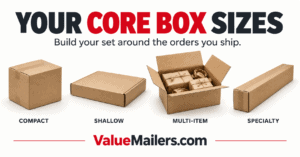
Finally, AI ecommerce packaging becomes more useful when a business has a clear packaging foundation. Sellers do not need every possible mailer and box size. They need the right core mix for their product catalog and enough data to understand which supplies perform best.
A Practical 2026 Packaging Checklist
- List your top 20 shipped SKUs and their current package types.
- Record product dimensions, packed weight, and package dimensions.
- Identify orders that often ship with empty space.
- Review damage claims and customer complaints by SKU.
- Compare box, bubble mailer, and poly mailer options for small items.
- Keep common sizes of lightweight packaging available at packing stations.
- Track when package choices change shipping cost or packing speed.
- Use AI tools to summarize trends and suggest packaging tests.
2026 Outlook: AI Will Make Packaging Decisions More Measurable
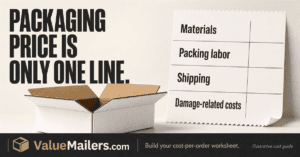
Therefore, The biggest change in 2026 is not that every package will be chosen by a fully autonomous system. The bigger shift is that packaging decisions will become easier to measure. Sellers will be able to compare the real cost of a mailer, box, label, packing time, damage claim, and customer experience in one connected workflow.
Beyond Unit Cost Thinking
In practice, That is important because ecommerce packaging has historically been judged by unit cost. A box that costs a few cents less may look better on a supply invoice, but it may not be the better choice if it increases packing time, adds dimensional weight, or creates more damage. The same is true for mailers. A lightweight mailer can be a smart choice for many products, but fragile or premium items may need more structure.
AI ecommerce packaging helps businesses compare those tradeoffs more clearly. It can show when a small box performs better than a larger carton, when a bubble mailer protects enough without adding unnecessary weight, and when a white corrugated mailer creates a better presentation for a higher-value shipment.
At the same time, For warehouse teams, this means fewer arguments over packaging habits. Buyers get smarter replenishment signals. Ecommerce managers can connect packaging data to margin analysis. Customers also receive packages that feel more intentional and arrive with less wasted space.
Because of that, The next phase of ecommerce shipping will reward businesses that build flexible packaging systems. That means keeping practical supplies on hand, including lightweight mailers, protective padded mailers, fold-together corrugated boxes, and specialty formats for media or flat products. AI can recommend the right choice, but the warehouse still needs the right packaging available at the moment of fulfillment.
Looking ahead, In that sense, artificial intelligence packaging is not a replacement for good operations. It is a multiplier. A team with clean SKU data, strong packaging options, and clear packing standards will get more value from AI than a team trying to automate a messy process.
FAQ: AI Ecommerce Packaging and Shipping Optimization
How is AI used in packaging?
In addition, In packaging, AI is used to analyze product dimensions, shipping history, package performance, damage rates, and cost data. It can recommend right-sized packaging, forecast supply needs, and help sellers choose between boxes, bubble mailers, poly mailers, and other shipping supplies.
Can AI reduce shipping costs?
As a result, Yes, AI can help reduce shipping costs by identifying oversized packages, suggesting lighter mailers, reducing void fill, and supporting better carrier and package selection. The savings depend on order volume, product mix, and how well the recommendations are implemented.
What is AI packaging optimization?
For example, AI packaging optimization is the process of using data and artificial intelligence to choose the most efficient protective package for each product or order. It focuses on cost, size, weight, protection, speed, and customer experience.
How does AI improve fulfillment?
Meanwhile, Fulfillment teams use AI to reduce manual decisions, forecasting labor and supply needs, recommending packaging, improving pick and pack workflows, and identifying bottlenecks that slow order processing.
Can AI reduce dimensional weight charges?
However, AI can help reduce dimensional weight exposure by recommending smaller boxes or mailers when appropriate. It can compare product dimensions with package dimensions before a label is purchased.
How does AI help ecommerce businesses?
Therefore, For ecommerce businesses, the technology helps teams make faster, more data-driven decisions across inventory, shipping, packaging, customer service, forecasting, and fulfillment operations.
Is AI changing warehouse operations?
In practice, Yes. AI is changing warehouse operations through better forecasting, order batching, pick path optimization, packing recommendations, automation tools, and smarter replenishment planning.
Can AI improve sustainable packaging?
At the same time, AI can support more sustainable packaging by reducing excess material, recommending right-sized packaging, lowering waste, and helping businesses avoid unnecessary reshipments caused by poor protection.
Will AI replace packaging designers?
Because of that, AI is more likely to support packaging designers than replace them. Designers and packaging buyers still need to evaluate branding, materials, durability, customer experience, and real-world performance.
How does AI help shipping departments?
Looking ahead, Shipping departments can use AI to compare packaging choices, estimate shipping costs, identify fulfillment delays, forecast supplies, and reduce avoidable errors before orders leave the warehouse.
Can AI choose between bubble mailers and boxes?
In addition, AI can recommend bubble mailers or boxes based on product data, but the final rule should consider fragility, presentation, carrier requirements, and customer expectations.
What packaging supplies work well with AI optimization?
As a result, Optimization works best when sellers maintain a clean set of common packaging choices, including bubble mailers, poly mailers, corrugated boxes, white corrugated mailers, record mailers, and protective shipping supplies.
Is AI useful for small ecommerce sellers?
For example, Yes. Small sellers can use AI tools to analyze order history, compare shipping costs, forecast packaging demand, and identify products that should move to smaller or lighter packaging.
What is the future of AI ecommerce packaging?
Meanwhile, The future is more predictive, more automated, and more connected to shipping software. Packaging decisions will increasingly happen before the packing station, based on data from products, carriers, warehouses, and customer outcomes.
Optimize Ecommerce Packaging With ValueMailers
However, AI may help sellers choose smarter packaging, but businesses still need dependable supplies ready when orders hit the packing station. ValueMailers offers ecommerce packaging categories designed for real fulfillment work, including bubble mailers, VM2 bubble mailers, poly mailers, corrugated boxes, white corrugated mailers, record mailers, and everyday shipping supplies.
As ecommerce packaging becomes more data-driven, the winning sellers will be the ones that combine smart technology with practical, right-sized packaging choices. Explore ValueMailers packaging supplies to build a faster, leaner, and more efficient fulfillment operation for 2026 and beyond.