If you need to know how to ship books without bent corners, crushed covers, or damaged spines, the answer starts before the label goes on. A book looks sturdy, but the corners, dust jacket, and spine can show every drop, bend, and loose gap inside the package.
The good news is that book shipping does not need to be complicated. With the right mailer, a snug fit, light surface protection, and a clean label, you can protect paperbacks, hardcovers, journals, catalogs, and signed editions with a repeatable packing method.
This guide explains how to choose between Bookfold Mailers, Stay Flat Mailers, Bubble Mailers, and Shipping Boxes so each order gets the right level of protection.
How to ship books safely in six steps
The safest way to ship books is to stop movement first, then protect the surface, then choose a package that matches the book’s thickness and value.
- Check the book condition. Look for loose dust jackets, weak corners, inserts, signed pages, or collectible details before packing.
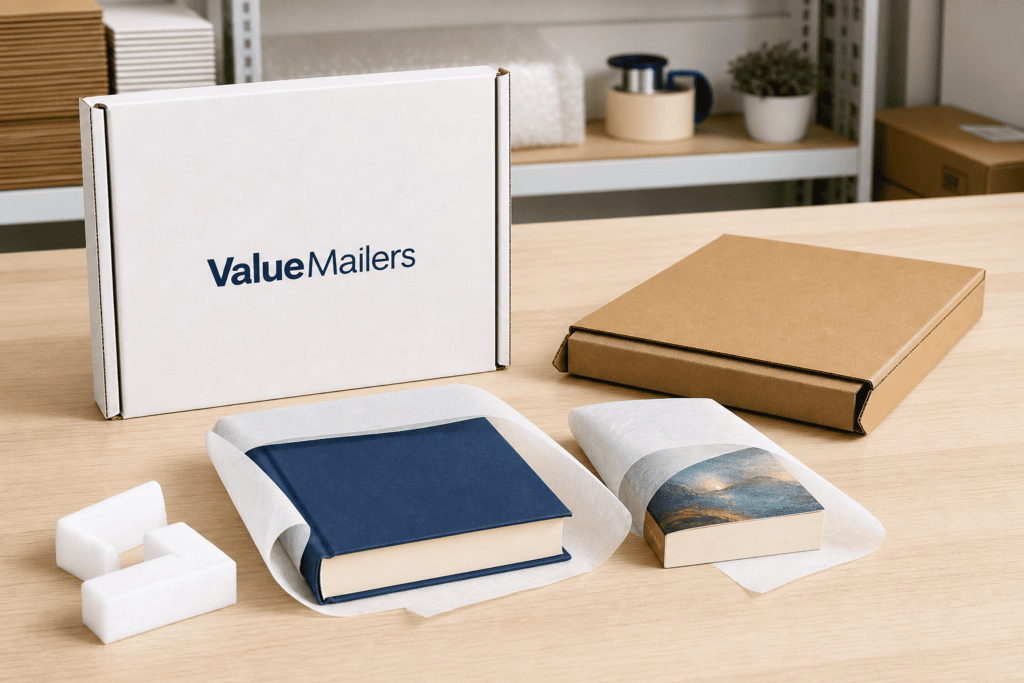
- Wrap the book. Use Packing Tissue Paper, a clear sleeve, or a light protective wrap to help prevent scuffs and dust.
- Protect vulnerable corners. Add small corner pads or folded kraft paper when the book is valuable, heavy, or being shipped across a long distance.
- Choose the right mailer or box. Use a Bookfold Mailer, Rigid Mailer, Stay Flat Mailer, Bubble Mailer, or Corrugated Mailer Box based on book type.
- Fill empty space. The book should not slide, bounce, or press against a weak seam.
- Apply Shipping Labels flat. Keep the label away from seams, tape edges, and corners that may rub during transit.
Choose the right mailer for the book
The best packaging depends on thickness, weight, value, and how much the book can flex. A thin workbook needs different protection than a hardcover textbook.
Bookfold Mailers for most ecommerce book orders
Bookfold Mailers are usually the best fit for standard paperbacks, hardcovers, journals, manuals, and small boxed media. Their scored wraparound design helps hold the book in place and gives the edges more structure than a loose envelope.
Use Bookfold Mailers when the book is thick enough to need depth control, but not large enough to require a full Shipping Box. They are especially useful for Ecommerce Packaging because one mailer style can often handle several book thicknesses.
Rigid Mailers and Stay Flat Mailers for thin books
Rigid Mailers and Stay Flat Mailers work well for thin paperbacks, magazines, booklets, prints, certificates, and other flat items that should not bend. They are not meant to create extra depth, but they do help keep flat items from curling or creasing.
If the item is thin and presentation matters, a clean white rigid mailer can look professional while still keeping the package simple.
Bubble Mailers for extra surface cushioning
Bubble Mailers, Kraft Bubble Mailers, and Poly Bubble Mailers add light cushioning around a book. They can work for lower-risk paperbacks or books that already have a protective sleeve.
However, a Bubble Mailer does not add the same corner structure as a corrugated book mailer. If the book is heavy, collectible, or likely to push through the corners, choose a Bookfold Mailer or box instead.
Shipping Boxes for heavy or high-value books
Use Shipping Boxes, Cardboard Shipping Boxes, White Corrugated Boxes, or Brown Corrugated Boxes when the book is oversized, very heavy, expensive, or part of a multi-item order. A Corrugated Mailer Box is also a good choice when the order includes accessories, gift wrap, or multiple books.
For boxed orders, leave just enough room for padding. Too much empty space lets the book build momentum inside the package, which is one of the main causes of dented corners.
How to pack a hardcover book
Hardcovers need extra attention because the boards and spine can transfer impact to the corners. Start by wrapping the book in Packing Tissue Paper or a protective sleeve. Then add a small amount of cushioning at the corners if the book is valuable or heavy.
Place the book in a Bookfold Mailer or a snug Corrugated Mailer Box. The book should sit flat, with no pressure forcing the cover to bow. Close the mailer evenly and check that the spine is not pressed against an exposed seam.
If you are shipping a collector edition, signed book, or gift order, treat presentation as part of the protection. Clean Packing Supplies reduce scuffs and help the customer feel like the order was handled carefully.
How to pack a paperback book
Paperbacks are lighter, but they bend more easily. Wrap the book first, then decide whether it needs rigidity or cushioning. A single paperback often works well in a Bookfold Mailer. A thin paperback or booklet may work better in a Rigid Mailer or Stay Flat Mailer.
For lower-cost books, a Bubble Mailer can be practical. For premium books, a bookfold or corrugated option gives better edge protection.
Do not let a paperback slide inside a mailer. If the package is too large, add a small amount of kraft paper or tissue so the book stays centered.
How to ship multiple books in one order
When shipping more than one book, stack them spine to spine or cover to cover so the load is even. Wrap the stack together if the books are similar in size. If they are different sizes, protect the smaller book so it does not dig into the larger one.
Use a Corrugated Mailer Box or Shipping Box for multi-book orders. Add padding around the stack, then shake the box gently. If you hear movement, add more void fill before sealing.
This same snug-fit principle is also used for record mailers: the package should match the product closely enough to prevent movement, while still leaving room for protective material.
Labeling and carrier checks
Place Shipping Labels on the largest flat surface of the package. Avoid wrapping labels over edges or seams because scanners may miss distorted barcodes.
If you plan to use USPS Media Mail, check the current USPS Media Mail rules before shipping. Books may qualify when they meet USPS requirements, but advertising restrictions and inspection rules can apply. Media Mail is useful for eligible books, but it is not the right service for every package.
For ecommerce sellers, the safest approach is to match the service to the order value, customer expectation, and replacement cost. A low-cost paperback may not need the same service as a rare signed hardcover.
Common book shipping mistakes to avoid
- Using a mailer that is too large. Empty space causes sliding and corner impact.
- Skipping surface protection. Tissue or a sleeve helps prevent scuffs on covers and jackets.
- Relying on cushioning without structure. Bubble Pouches and bubble lining help with light impact, but they do not replace a rigid mailer for bend-sensitive books.
- Overpacking the book. Too much pressure can warp covers or crush corners.
- Placing the label over a seam. Keep barcodes flat and easy to scan.
Quick packaging guide by book type
| Book type | Best packaging choice | Why it works |
|---|---|---|
| Standard paperback | Bookfold Mailer or Bubble Mailer | Controls movement and adds light protection |
| Hardcover book | Bookfold Mailer or Corrugated Mailer Box | Protects corners, spine, and cover boards |
| Thin booklet or magazine | Rigid Mailer or Stay Flat Mailer | Helps prevent bending and creasing |
| Multiple books | Shipping Box or Cardboard Shipping Box | Provides room for padding and weight support |
| Gift or premium order | White Corrugated Boxes with Packing Tissue Paper | Improves presentation and protection |
Final checklist before you ship books
- The book is wrapped to prevent scuffs.
- The corners have enough protection for the book’s value and weight.
- The mailer or box is snug, not loose.
- The package is sealed flat and evenly.
- The Shipping Label is readable and placed on a flat surface.
- The carrier service fits the item and customer expectation.
When you know how to ship books with the right Packaging Supplies, you reduce returns, protect customer trust, and make each order look more professional. ValueMailers carries the Shipping Supplies, Bookfold Mailers, Rigid Mailers, Bubble Mailers, Poly Mailers, Corrugated Mailer Boxes, Packing Tissue Paper, and labels that help ecommerce sellers pack books with confidence.