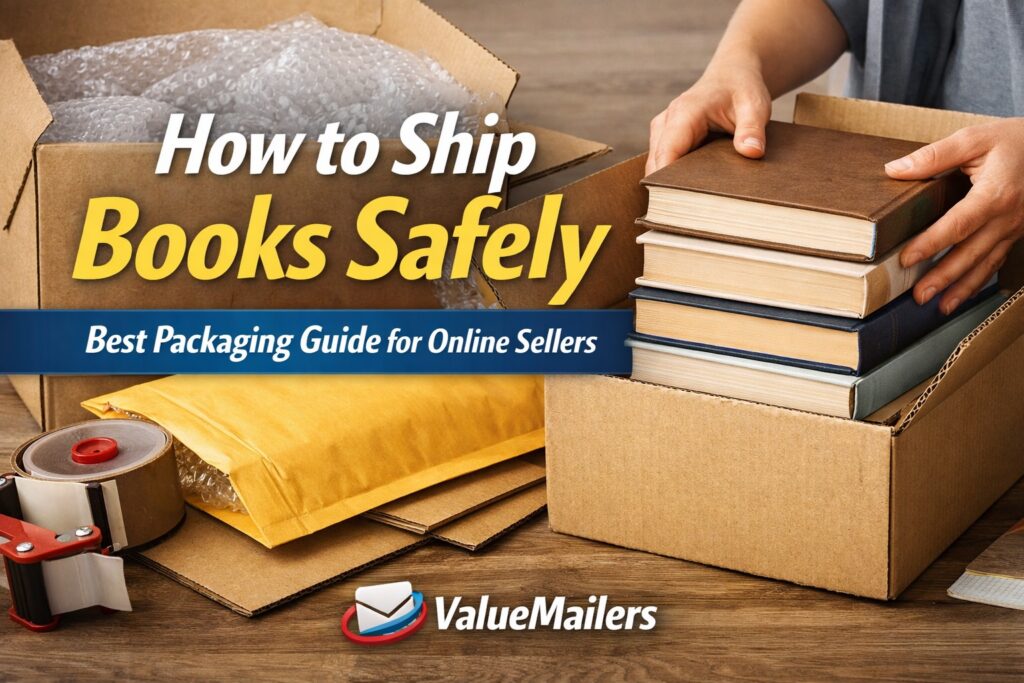
Shipping books may seem simple, but poor packaging can lead to bent covers, damaged corners, and unhappy customers. Because of this, many sellers ask an important question: how to ship books safely while keeping shipping costs low.
The right packaging helps protect books during transit while keeping postage costs reasonable. At ValueMailers, we supply packaging materials used by thousands of online sellers.
If you ship books regularly, choosing the correct packaging can make a big difference in customer satisfaction.
Why Proper Book Packaging Matters
Books can easily become damaged during shipping. Corners may bend, covers may crease, and moisture can damage pages.
Therefore, proper packaging is essential.
Good packaging helps:
- protect book corners and edges
- prevent bending during transit
- reduce shipping damage claims
- improve customer satisfaction
As a result, sellers who use proper packaging often receive fewer returns and better reviews.
Best Packaging Options for Shipping Books
Different books require different packaging materials.
Bubble Mailers
Bubble mailers are one of the most popular choices for shipping lightweight books and paperbacks. The padded interior helps absorb shock during transit.
Common items shipped in bubble mailers include:
- paperback books
- magazines
- journals
- small textbooks
A #2 bubble mailer provides about 8.5 x 11.25 inches of usable space, making it a popular option for many book shipments.
You can view available padded envelopes here:
https://www.valuemailers.com/product-category/bubble-mailers
Corrugated Boxes
For heavier books or valuable items, corrugated boxes provide stronger protection.
Boxes are recommended for:
- hardcover books
- textbooks
- collectible books
- multi-book shipments
Corrugated boxes help prevent crushing and protect book corners during shipping.
Explore available box sizes here:
https://www.valuemailers.com/product-category/corrugated-boxes
Chipboard Inserts for Extra Protection
Some sellers add chipboard inserts when shipping books. These inserts help prevent bending during transit.
Chipboard pads are especially helpful when shipping:
- collectible books
- comic books
- magazines
You can see available chipboard options here:
https://www.valuemailers.com/product-category/chipboard-pads
How to Pack Books for Shipping
Packing books correctly can prevent damage during transit.
Follow these steps:
- Measure the book before choosing packaging.
- Add protective material if needed.
- Choose packaging with enough usable space.
- Seal the package securely.
In addition, padded envelopes or corrugated boxes can significantly reduce shipping damage.
How to Choose the Correct Mailer Size
When selecting packaging, always measure the book first.
A simple rule is to add:
- 1 inch to the length
- ½ inch to the width
This ensures the book fits comfortably inside the packaging.
For example:
| Book Size | Recommended Packaging |
|---|---|
| 8 x 5 paperback | #0 bubble mailer |
| 9 x 6 paperback | #2 bubble mailer |
| 10 x 7 hardcover | corrugated box |
Using slightly larger packaging helps prevent bending or pressure damage.
Where to Buy Packaging for Shipping Books
High-quality packaging helps protect books during shipping. Many sellers prefer padded envelopes or boxes designed specifically for shipping products.
At ValueMailers, we offer a wide range of packaging supplies used by eCommerce businesses.
Browse our packaging categories:
Bubble Mailers
https://www.valuemailers.com/product-category/bubble-mailers/
Corrugated Boxes
https://www.valuemailers.com/product-category/corrugated-boxes/
Poly Mailers
https://www.valuemailers.com/product-category/poly-mailers-shipping-bags/
Frequently Asked Questions
Can I ship books in bubble mailers?
Yes. Bubble mailers work well for lightweight books and paperbacks. The padded interior helps protect books during shipping.
Should hardcover books ship in boxes?
Yes. Hardcover books benefit from stronger protection. Corrugated boxes help prevent crushing and corner damage.
How do I prevent books from bending in the mail?
Use chipboard inserts, padded envelopes, or corrugated boxes. These materials help protect books during transit.
What is the cheapest way to ship books?
Many sellers use USPS Media Mail because it offers lower shipping rates for books and printed materials.