How to Ship Coffee Mugs Safely: A Packaging Guide for Sellers
To ship coffee mugs safely, protect the handle and hollow interior, cushion the mug on every side, and place it in a close-fitting corrugated box with no room for movement. In other words, a ceramic mug is not a padded-mailer shipment: even a small drop or stack pressure can crack the body or snap the handle when the item is allowed to touch a box wall.
For a single standard mug, a protective inner wrap, void fill, and a sturdy box are usually the right starting point. However, for gift sets, handmade ceramics, oversized mugs, or high-value orders, use more separation and consider a double-box approach. The goal is not maximum material; it is a stable package that keeps the mug suspended away from every exterior panel.
Why coffee mugs break in transit
A mug has two vulnerable areas: the handle concentrates force at a narrow joint, while the ceramic body can crack when it meets a hard surface. Most importantly, empty space is the main problem. If the mug can shift, it can build momentum before hitting the side of its package.
Consequently, good mug packaging solves four risks:
- Direct impact: cushioning keeps ceramic from touching the box walls.
- Handle stress: a separate protective layer prevents the handle from becoming the first point of contact.
- Vibration and rubbing: a snug wrap and void fill limit repeated movement.
- Crush pressure: corrugated outer packaging offers more structure than a flexible envelope.
The right package is the smallest one that still leaves room for protective material on all six sides of the wrapped mug.
Coffee mug shipping supplies to keep on hand
Build a repeatable packing station with clean wrapping material, cushioning, corrugated boxes, packing tape, and labels. Packing Tissue Paper is useful for wrapping the handle and separating glazed surfaces before heavier cushioning is added. Self-sealing Bubble Pouches can speed up the first protective layer for a compatible mug size; the same product family is also sold as Bubble Out Bags.
Keep Bubble Mailers for small, low-risk products that need light cushioning, but do not use one as the final package for a ceramic mug. A bubble mailer remains flexible and cannot provide the clearance and crush resistance that a breakable mug needs.
Additionally, for the outer package, browse White Corrugated Boxes in a size that fits the wrapped mug with room for fill. White Corrugated Mailer Boxes are a neat option for gift-ready ecommerce orders when the dimensions and protection level fit the product. A compact White Corrugated Shipping Boxes option can work for a small, fully protected item; always measure the finished wrap rather than choosing by the unwrapped mug alone. Finish the parcel with a flat, readable Shipping Labels label.
How to pack mugs for shipping: step by step
1. Inspect the mug and measure the finished pack
Check the rim, body, base, and handle for existing chips or hairline cracks before packing. For handmade, limited-edition, or high-value pieces, take a quick condition photo for your records.
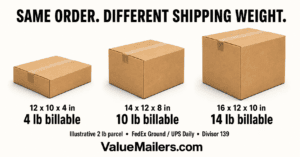
Measure the mug after adding its inner wrap. In particular, include the handle, which often makes the packed width much larger than the mug body. This finished measurement—not the listing measurement—should determine the box size.
2. Support the interior and protect the handle
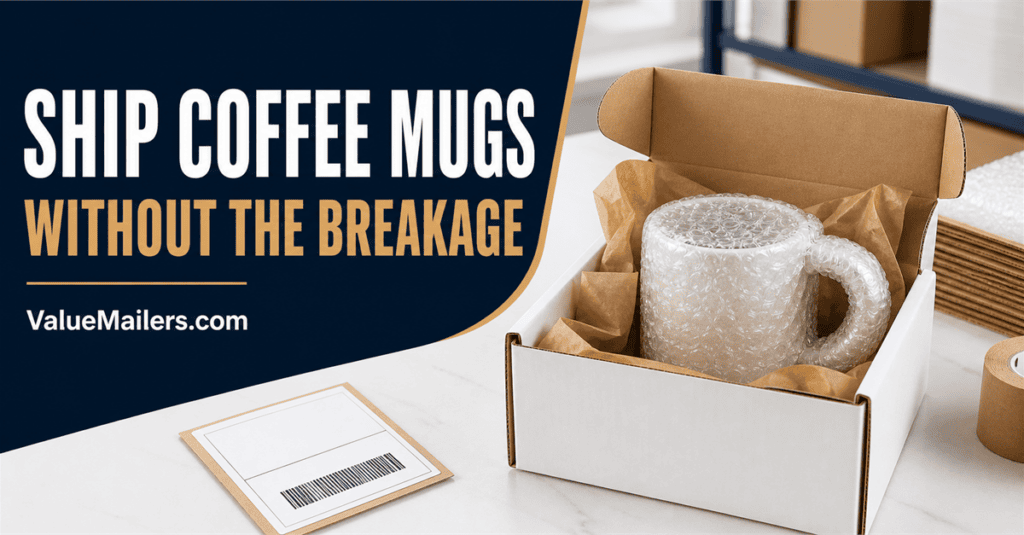
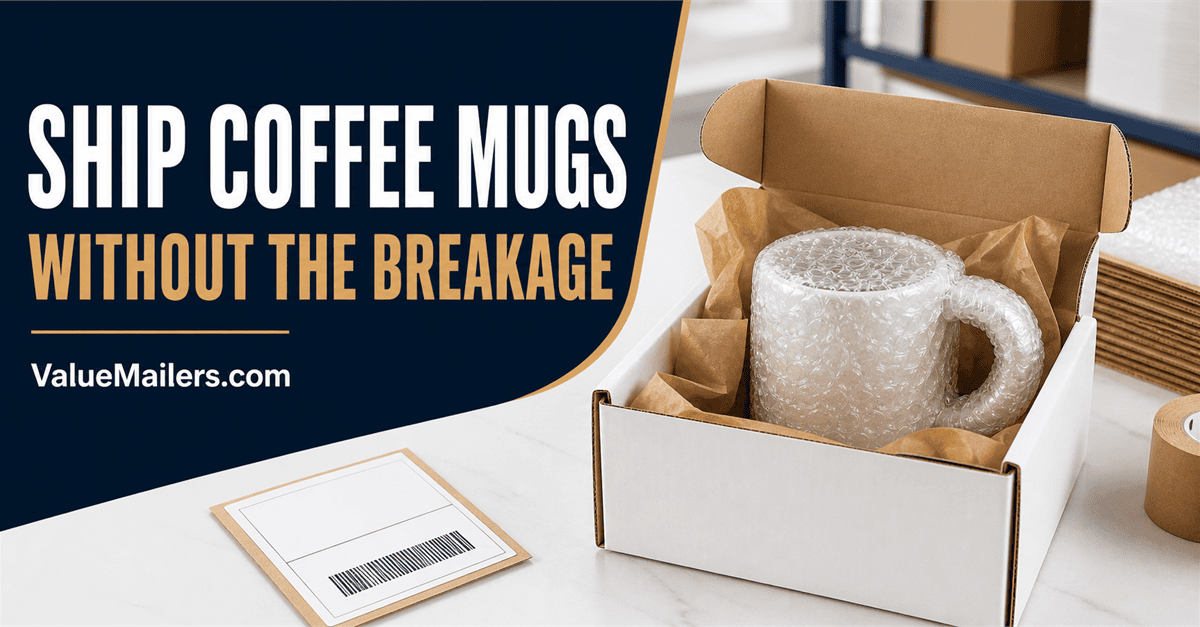
Lightly fill the mug’s opening with clean tissue or another non-abrasive cushioning material. This helps protect the rim and reduces the chance that the mug crushes inward if it receives pressure.
Wrap the handle first with tissue and a small layer of cushioning. Do not tape directly to a glazed, printed, or delicate surface. The objective is to keep the handle from pressing against the box or becoming an exposed hard edge.
3. Wrap the whole mug and secure the layer
Add cushioning around the entire mug, including the base and rim. Secure the wrap so it stays in place, but avoid compressing it so tightly that the handle has little shock absorption. The mug should be fully covered with no ceramic exposed.
For a multi-mug order, wrap every mug separately. Never nest unprotected mugs together, and do not let two wrapped mugs share a contact point inside the box.
4. Choose the outer packaging level
Use the condition, weight, and order size to choose the right setup.
| Shipment | Recommended setup | Packing priority |
|---|---|---|
| One standard ceramic mug | Wrapped mug, cushioning on every side, close-fitting corrugated box | Keep the handle and body away from every wall. |
| Large, handmade, or collector mug | Extra cushioning, strong inner box, then a larger outer box with fill | Add a second protective zone for higher breakage risk. |
| Two or more mugs | Individually wrapped mugs, separated in a corrugated box | Prevent mug-to-mug contact and eliminate voids. |
| Mug in a retail gift box | Protect the retail box, then place it in a shipping box with cushioning | The retail carton is presentation packaging, not necessarily transit protection. |
5. Center the mug and remove all movement
Create a cushioning layer on the bottom of the box. Place the wrapped mug in the center, then add fill on the sides and top until the item cannot shift. Do not rely on a “fragile” marking to compensate for loose packing; automated handling can still expose a parcel to drops, vibration, and stacking pressure.
Next, close the box and gently shake it. If you hear a rattle or feel movement, reopen it and add fill or move to a closer-fitting box. If the box bulges or the flaps will not close naturally, choose a larger box instead of forcing the seal.
6. Seal and label the box
Finally, seal the center seam and reinforce openings as appropriate for the package weight and route. Apply the address label to the largest flat panel without folding it over a seam or corner. Recheck the recipient address, return address, order count, and package weight before buying postage.
Carrier services, size limits, tracking options, and coverage terms can change. Review the selected carrier’s current requirements for valuable, fragile, international, or time-sensitive orders before shipping.
When to double box a mug
Double boxing means placing a protected inner box inside a larger outer box with cushioning around the inner box. It adds material and space, so it is not necessary for every everyday mug. It is a sensible upgrade when the shipment is unusually fragile, irreplaceable, heavy, or traveling with other dense items.
Use a double-box setup when:
- the mug is handmade, vintage, signed, or high value
- the handle is unusually thin or sculptural
- the order contains several mugs or other breakable products
- the first box is part of the customer presentation and must arrive pristine
- you are shipping a long distance or internationally and want an additional buffer
In a double-box setup, the inner box should already be stable on its own. The outer box is an added impact zone, not a substitute for wrapping the mug correctly.
Common mistakes when shipping ceramic mugs
Using only a padded envelope. Padded mailers help with light impacts, but they cannot keep a ceramic mug from being crushed or pushed against a hard surface. Use corrugated protection.
Leaving the handle exposed. The handle is often the most fragile part of the mug. Give it its own protective layer and keep it away from box walls.
Choosing a box that is too large. Excess space makes the mug move. Choose a closer fit and use fill to suspend the wrapped mug.
Relying on the retail carton. A branded mug box can improve presentation, but it may not have enough padding or board strength for parcel transit by itself.
Shipping multiple mugs loose together. Each mug needs separate wrapping and a barrier. Two mugs that collide inside a box can damage each other even if the outer carton remains intact.
A note on Record Mailers and package fit
Purpose-built packaging works best when it matches the product. Record Mailers are designed for vinyl and other large flat shipments, where their foldable corrugated format helps limit bending and empty space. A coffee mug needs a different shape of protection: a cushioned corrugated box that leaves safe clearance around a three-dimensional, breakable item. The shared rule is simple—choose packaging around the protected item’s real footprint and depth, not the package you happen to have on hand.
Coffee mug shipping checklist
Before dispatch, confirm that you can answer yes to each question:
- Is the mug clean, dry, and inspected for existing damage?
- Is the interior supported and the handle separately protected?
- Is every ceramic surface covered by cushioning?
- Is there protective material between the wrapped mug and all six box sides?
- Does the sealed package pass a gentle shake test with no movement?
- Is the shipping label flat, accurate, and readable?
Frequently asked questions
Can I ship a coffee mug in a bubble mailer?
Not as the final package for a ceramic mug. A bubble mailer is flexible and does not provide enough crush resistance or clearance. Use a corrugated box with cushioning around the mug instead.
What is the best box for shipping a mug?
The best box is the smallest sturdy corrugated option that fits the wrapped mug with enough room for cushioning on every side. Measure after wrapping, especially around the handle, and choose a larger box if the flaps do not close without pressure.
How do I ship multiple coffee mugs safely?
Wrap each mug individually, keep mugs from touching one another, and use a corrugated box with fill between every item and around the outside. Consider a double-box method for valuable sets or heavier multi-mug orders.
Should I mark the box fragile?
You may use handling labels when appropriate, but safe packing should not depend on them. The package still needs cushioning, a sturdy box, and no internal movement.
Pack mugs with a no-movement rule
The best way to ship coffee mugs safely is to protect the handle, cushion the complete mug, and use a corrugated box that keeps it from moving. Build that process into your everyday ecommerce packaging routine, and you will have a faster, more consistent way to protect ceramic orders and customer confidence.