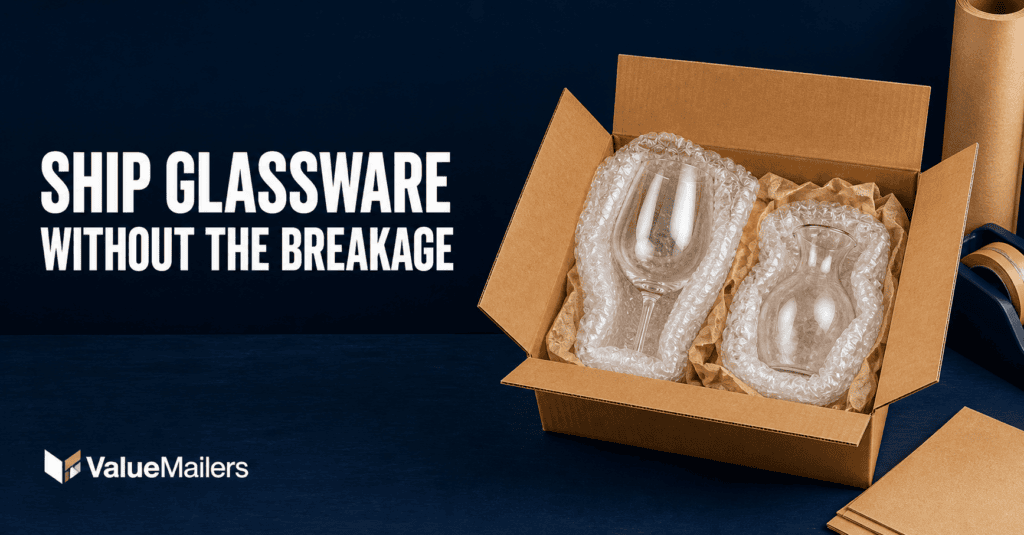
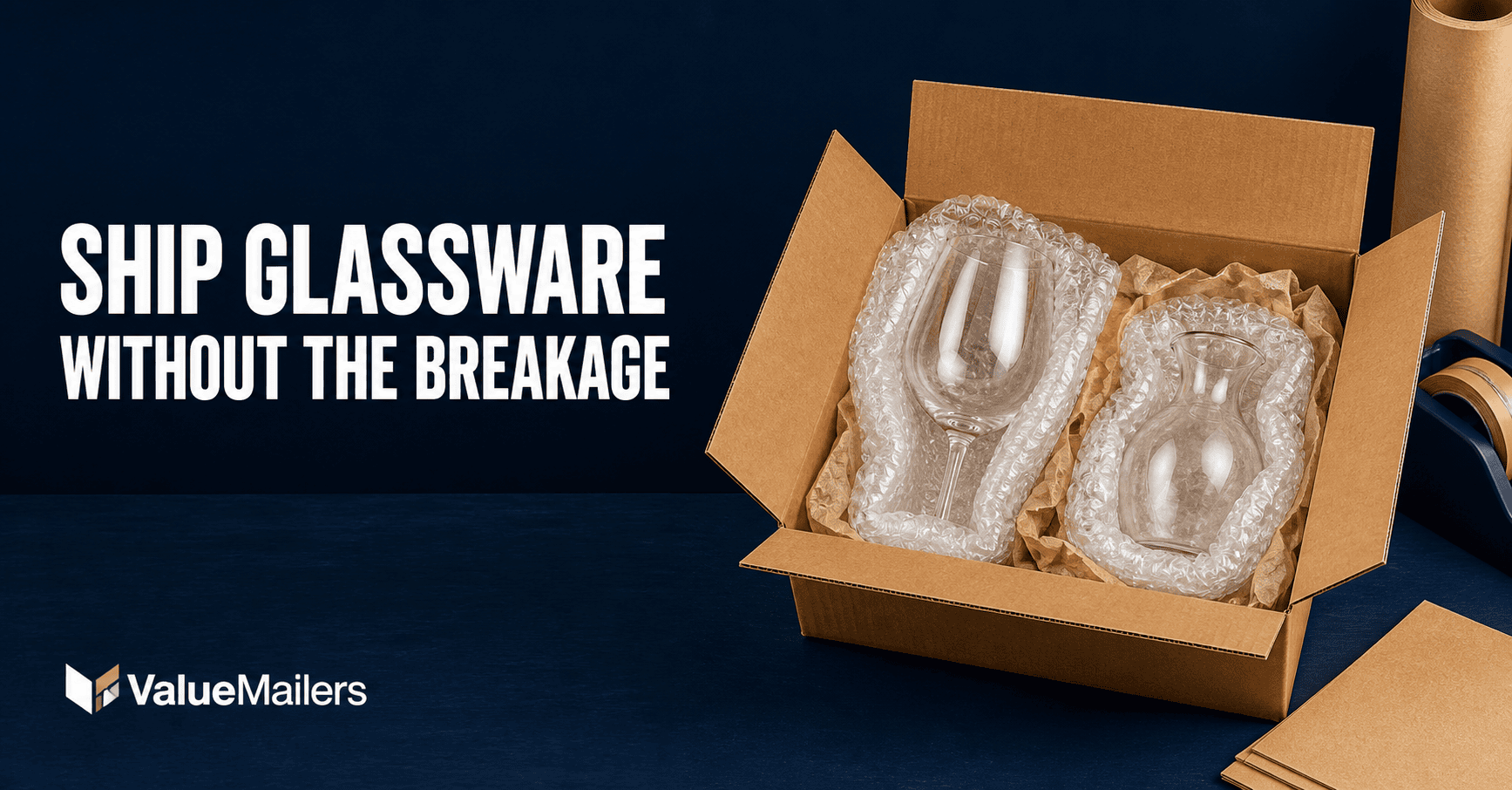
Glassware is unforgiving in transit. A small amount of movement, an exposed rim, or a box that gives way under pressure can turn a profitable order into a replacement. The best way to ship glassware safely is to create separate layers of protection: wrap each piece, keep pieces from touching, cushion the load, and use a sturdy box that leaves no room for the contents to shift.
This guide is designed for online sellers shipping drinkware, vases, jars, ornaments, and other non-hazardous glass items. It does not replace a carrier's packaging rules or restrictions, so check those requirements before you ship. But the packing method below gives your order the structure it needs to handle normal bumps, vibration, and stacking in the carrier network.
Start by matching protection to the item
Do not pack every glass item the same way. Before reaching for tape, consider its shape, weight, value, and whether it has fragile features such as a stem, handle, lid, or narrow neck.
- Small, sturdy glassware: A single tumbler or jar may need individual wrapping, cushioning, and a close-fitting shipping box.
- Thin or oddly shaped pieces: Wine glasses, ornaments, and vases need extra protection around rims, stems, handles, and narrow points.
- Sets and multiple pieces: Each item must be isolated so glass never contacts glass inside the box.
- Heavy, vintage, or high-value items: Use more cushioning and consider a box-within-a-box method. Insurance, signature options, and carrier-specific services may also be worth reviewing.
The goal is controlled protection, not simply more material. A well-packed parcel keeps the item centered and supported on every side. Too much loose fill can still let a heavy piece travel through the box; too little leaves it exposed to impact.
Glassware shipping supplies checklist
Set up the materials before you pack. A repeatable process is faster and makes it less likely that a weak point gets overlooked.
- Bubble cushioning or a correctly sized bubble pouch
- Clean packing tissue paper for surface protection and light void fill
- Corrugated dividers or stiff corrugated panels when separating multiple pieces
- A right-sized brown corrugated shipping box
- Packing tape
- A clear shipping label
- Optional fragile or orientation labels where appropriate
Bubble cushioning absorbs shocks, while a corrugated box provides the structure that resists crushing. They do different jobs, so neither should be treated as a substitute for the other. For smaller, less breakable items that still need a padded outer layer, bubble pouches can be a convenient way to add cushioning before an item goes into its box. For lightweight, non-breakable orders, Bubble Mailers provide a padded mailing option, but they should not replace a corrugated box when you are shipping glassware.
How to pack one glass item for shipping
1. Inspect and prepare the item
Start with a clean, dry item. Remove or secure loose lids, stoppers, and detachable parts. If a lid can move independently, wrap it separately rather than letting it rattle against the glass. For a mug or handled piece, fill the hollow area with tissue paper first so the handle and body have more support.
Pay special attention to rims, stems, handles, and corners. Those projections concentrate force and are often the first place damage appears. A little extra cushioning at those points is more useful than adding random layers around an already-protected body.
2. Wrap the glass individually
Place the item on several inches of bubble cushioning, with the bubbles facing inward toward the glass. Fold the material over the item and overlap the edges so no glass is exposed. Secure the wrap with tape on the cushioning, not directly on the item.
For a stemmed glass, begin by protecting the stem and base, then continue wrapping the bowl. For a vase or bottle, use additional padding at the neck and base. The finished wrapped item should feel firm and evenly protected without tape pressing directly against delicate surfaces.
3. Choose a close-fitting inner box
Select a new or clean corrugated box that leaves space for cushioning on every side but is not dramatically larger than the wrapped item. A box that is too large requires more void fill and gives the item more room to gain momentum during a drop.
Create a cushion on the bottom using crumpled packing tissue paper or bubble cushioning. Set the wrapped item upright if its shape permits, then add fill around all sides and above it. Use enough material that the piece remains centered and cannot touch the walls of the box.
Before sealing, perform a gentle shake test. If you can feel or hear movement, reopen the box and add more void fill. The item should feel secure, not merely covered.
4. Seal the box for transit
Close all flaps and seal the center seam with quality packing tape. Reinforce the other seam direction as needed for the box size, weight, and travel distance. Do not rely on a box's tuck flaps, masking tape, or a thin strip of tape to hold a fragile shipment closed.
Apply the shipping label to the largest flat panel, away from seams and corners. Make sure barcodes lie flat and remain fully scannable. A fragile label can alert handlers, but it is not a replacement for strong packaging: pack the order as though it may be set down, stacked, and conveyed in several orientations.
How to ship a set of glasses without breakage
The critical rule for a set is simple: no piece should touch another piece. Wrap each glass separately, including any lids or detachable components. Use dividers if you have them, or build individual compartments with corrugated panels and cushioning.
Place a cushioning layer on the bottom of the box, then arrange the wrapped pieces so there is protected space between them and around the outer walls. Fill gaps with tissue paper or bubble cushioning until each piece stays in its compartment. Add a final top layer before you close the box.
Avoid stacking unprotected glasses inside one another. Nesting may save space, but it puts concentrated pressure on rims and makes internal breakage far more likely. If a product was designed to nest, keep a protective layer between every piece and use a packing method that prevents the stack from shifting.
When to double-box glassware
Double-boxing adds a second protective shell around a sealed inner box. It is especially sensible for heavy glass, thin stemware, high-value pieces, long-distance shipments, and orders that need extra distance between the item and the outer carton.
First, pack and seal the inner box as described above. Then select an outer box that allows cushioning on every side of the inner box. Place cushioning in the bottom, center the inner box, and fill all remaining space. The inner box should not touch any outer wall and should not move when the outer carton is shaken lightly.
Use a strong outer carton in good condition. ValueMailers' brown corrugated boxes are available in a broad range of sizes, which helps sellers right-size the outer package instead of forcing a fragile item into an oversized or worn box. The site notes that most of these boxes use 32 ECT construction; choose a suitable box based on the item's weight, dimensions, and carrier requirements.
Common mistakes that lead to broken glass
Using one layer of cushioning as the entire package
Bubble cushioning helps absorb impact, but it does not provide the same compression resistance as a corrugated shipping box. A wrapped glass item still needs a structured outer carton and void fill that keeps it from shifting.
Leaving empty space in the box
Empty space allows the contents to move, pick up force, and strike a wall. Fill side, top, and bottom gaps—not just the spaces that are easiest to see. The shake test is a quick final check.
Reusing a weakened box
A clean, undamaged box can sometimes be reused for low-risk shipping, but avoid boxes with soft spots, torn flaps, crushed corners, old labels, or prior moisture exposure. Fragile items deserve a box whose strength has not already been compromised.
Expecting a fragile sticker to prevent damage
Labels are useful signals, but no label guarantees a parcel will be handled gently. Good eCommerce packaging assumes normal shipping conditions and protects the product without depending on special treatment.
Choosing the wrong package for a flat item
Not every fragile order needs a carton. A flat, non-glass paper item may be better served by a rigid mailer, while vinyl records need purpose-built record mailers to resist bending and corner damage. Glassware is different: its weight, shape, and breakability usually call for cushioning inside a corrugated box rather than a flat mailer.
A practical pre-shipment checklist
Before handing the order to the carrier, confirm that:
- Every glass piece is individually wrapped.
- Rims, stems, handles, and narrow necks have extra protection.
- No glass pieces touch each other or the box walls.
- The box passes a gentle shake test with no internal movement.
- All seams are sealed with shipping-grade tape.
- The label is flat, readable, and clear of seams.
- The package meets the selected carrier's current size, weight, and service requirements.
Ship glassware with a system, not a guess
Reliable glassware shipping comes from a repeatable sequence: inspect, wrap, cushion, isolate, right-size, seal, and check for movement. Once that sequence becomes part of your packing station, it is easier to protect orders consistently without wasting materials or slowing fulfillment.
Stock the core shipping supplies you use most—cushioning, tissue paper, corrugated boxes, tape, and labels—then adjust the protection level to the item in front of you. The right packaging does more than help prevent breakage; it protects your customer experience and your bottom line.