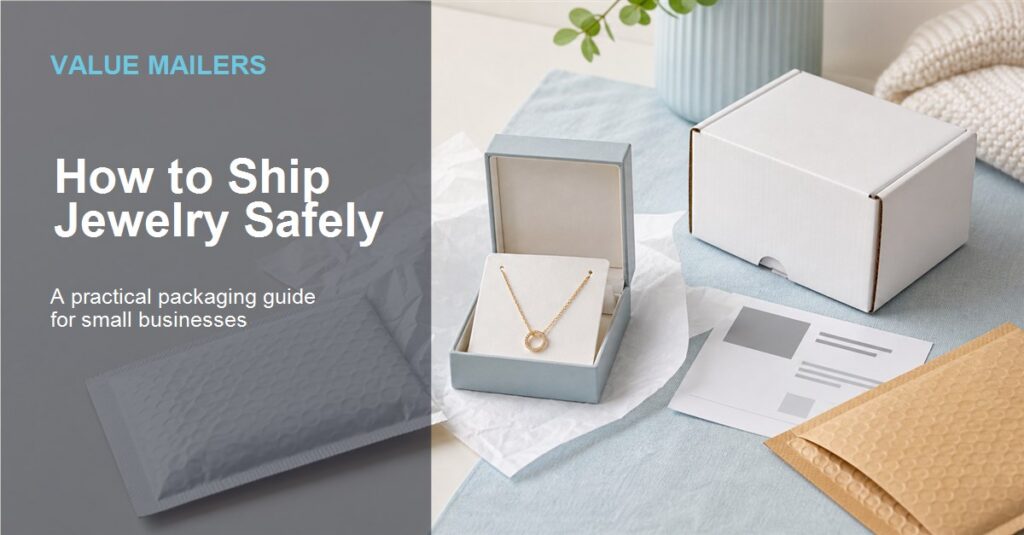
Jewelry may be small, but it can be easy to damage, lose, tangle, or crush in transit. The best way to ship jewelry is to secure each piece first, protect its presentation box or card, and then choose an outer package that matches the order’s real risk—not just its size.
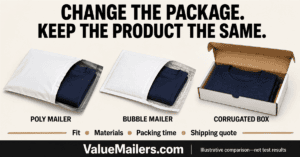
For many lightweight, non-fragile orders, a small padded mailer is a fast, space-saving choice. A structured jewelry box, a multi-piece order, or an item that could be bent or crushed needs a corrugated shipping box instead. This guide walks through the decision and a dependable packing process for ecommerce sellers.
Choose the outer package before you start packing
Start with the jewelry’s condition at delivery. A package can arrive on time and still create a poor customer experience if a chain is tangled, a display card is bent, or the retail box is crushed.
| What you are shipping | Best outer package | Why |
|---|---|---|
| Earrings, charms, or a small item in a sturdy pouch | Small poly bubble mailer | Adds lightweight cushioning and helps protect against minor handling impacts. |
| A necklace, bracelet, or several small pieces in a presentation box | Bubble mailer or small brown corrugated box | Use a mailer only when the inner box will not crush; otherwise choose rigid walls. |
| Rings, watches, fragile stones, premium gift boxes, or multi-item orders | Corrugated shipping box | Gives the package the structure a padded envelope cannot provide. |
| Flat jewelry cards that must stay pristine | Rigid flat mailer or small box | Helps prevent bends and creases. |
The smallest package is not automatically the best package. If the jewelry box pushes hard against the mailer, the closure barely reaches, or the item can flex under pressure, size up or move to a box.
How to package jewelry for shipping in six steps
1. Check and secure every piece
Work on a clean surface. Close clasps, fasten earring backs, and secure chains so they cannot slide around or knot together. Put each item in its own pouch, small resealable bag, or compartment. For a necklace, close the clasp and keep the chain from moving freely around the display card or insert.
This first layer prevents surface rub, missing components, and tangling before the shipment reaches its outer packaging.
2. Protect the presentation
Use packing tissue paper around a jewelry box, pouch, or card when a clean unboxing experience matters. Tissue is useful for preventing light scuffs; it is not a substitute for crush protection.
For pieces sold on cards, make sure the card is supported. If it can bend between two fingers, do not expect a soft mailer alone to keep it flat through sorting equipment.
3. Add a rigid inner container when needed
Place delicate jewelry in a proper jewelry box, rigid insert, or another protective inner container. The inner container should keep the piece from shifting and protect its shape before it goes into a mailer or shipping box.
Avoid using loose filler to compensate for an oversized package. A better fit reduces movement; if there is open space in a box, add only enough cushioning to stop the inner container from moving when you gently shake it.
4. Match cushioning to the shipment
Bubble pouches are useful around a compact jewelry box or a small, delicate component before it goes into a box. A kraft bubble mailer offers an all-in-one padded outer layer for light orders, while poly bubble mailers add a moisture-resistant exterior.
Use cushioning to protect against minor impact and rubbing. Do not rely on it to make a crushable box safe inside a mailer; move that order to corrugated packaging.
5. Seal the package securely and discreetly
Press a self-seal flap down firmly over a clean, dry surface. For boxes, close every seam with appropriate packing tape. Keep the outer packaging neutral and avoid details that identify high-value contents.
For a high-value shipment, review the carrier’s current packaging, declared-value, signature, and service requirements before purchasing postage. Requirements and coverage limits can change, and the carrier’s rules—not a general packing guide—control the shipment.
6. Apply a readable shipping label
Place shipping labels on the largest smooth panel, without wrapping the barcode around an edge, seam, or bubble texture. Confirm the address is complete and the barcode is flat and easy to scan.
Before handoff, compare the label to the order, weigh and measure the finished package, and retain the receipt or acceptance scan when appropriate.
Bubble mailer or box: the fast jewelry-shipping decision
Choose a bubble mailer when all of these are true:
- The jewelry is individually secured.
- The item or its inner pouch is light and not crushable.
- The package fits without force or a strained closure.
- A little flex in transit will not damage the item or its presentation.
Choose a cardboard shipping box when any of these are true:
- The item is fragile, premium, heavy for its size, or easily bent.
- The retail or gift box must arrive crisp and undented.
- The order includes several pieces that could shift together.
- The jewelry has sharp edges, delicate components, or a rigid display that needs crush resistance.
A white corrugated box can be a practical choice when presentation matters, while brown corrugated boxes are a dependable everyday option for protective fulfillment. Keep a small range of both mailers and boxes on hand so packers do not force every order into one format.
Build a simple jewelry shipping station
A consistent station makes jewelry shipping faster and less error-prone. Keep these supplies within reach:
- Small pouches or resealable bags for individual pieces
- Tissue paper for presentation and scuff protection
- Bubble pouches or bubble cushioning for boxed pieces
- Poly or kraft bubble mailers for low-risk orders
- Small corrugated shipping boxes for crush-sensitive orders
- Tape and shipping labels
Use a short final check: jewelry secured, inner box or card protected, no movement, closure sealed, label flat, and order details matched. This routine is especially useful during busy sales periods, when skipping one small step can create a return or replacement.
Keep different products in their own packaging lanes
The right jewelry packaging is not necessarily the right packaging for every item in a catalog. Soft goods may ship well in poly mailers, while flat prints need rigid protection. If your business also sells vinyl, dedicated record mailers are designed for that separate flat, corner-sensitive shipping job.
Creating these simple lanes helps your team pack consistently: mailers for light padded jewelry orders, boxes for crush-sensitive jewelry, and purpose-built mailers for flat media. It also makes reorder planning for everyday packaging supplies more straightforward.
Common jewelry packaging mistakes to avoid
Sending a presentation box in a too-tight mailer
A padded envelope does not create rigid space around a box. If the box is tight enough to show through or press against the flap, use a larger package or a corrugated box.
Letting chains and small parts move freely
Loose movement causes tangling, scratches, and missing earring backs. Secure and separate pieces before adding tissue or cushioning.
Using oversized boxes without controlling movement
Extra space lets the inner container build momentum. Right-size the box and add protective material only until the inner package stays still.
Treating a “fragile” label as protection
Labels can communicate handling information, but they do not replace a package that fits, cushions, and resists crushing. Build protection into the package itself.
Frequently asked questions about shipping jewelry
Can I ship jewelry in a bubble mailer?
Yes—when the item is light, individually secured, and not vulnerable to crushing. Use a small bubble mailer around a sturdy pouch or compact inner container. Move to a corrugated box for fragile pieces, gift boxes, watches, or orders that need rigid protection.
How should I ship a necklace without tangling it?
Close the clasp, secure the chain to a card or insert, and place it in a separate pouch or compartment. The goal is to keep the chain from moving freely before it enters the outer package.
Do jewelry boxes need an outer shipping box?
Usually, yes, when the jewelry box is important to the presentation or can crush. A bubble mailer may be sufficient only for a very sturdy, compact inner box that fits without pressure. When in doubt, use a small corrugated box.
What packaging supplies should a jewelry business keep in stock?
Most sellers need individual pouches or bags, tissue paper, a small padded-mailer size, bubble pouches, a few small corrugated box sizes, tape, and shipping labels. Adjust the assortment after reviewing which package sizes handle most orders safely.
Pack small orders with the same care as large ones
Reliable jewelry shipping comes down to layered protection: secure the piece, protect the presentation, eliminate movement, and choose an outer package that will not compromise the order. ValueMailers offers packaging supplies for lightweight mailer shipments and structured box orders, so a small business can build a practical, repeatable fulfillment process.