Posters are lightweight, but they are easy to crease, bend, scuff, or crush in transit. The best way to ship a poster depends on its size, paper weight, value, and whether the buyer expects it flat, rolled, or framed.
For ecommerce sellers, the goal is simple: choose packaging that prevents movement and surface damage without adding unnecessary dimensional weight. This guide explains how to ship posters safely in each format.
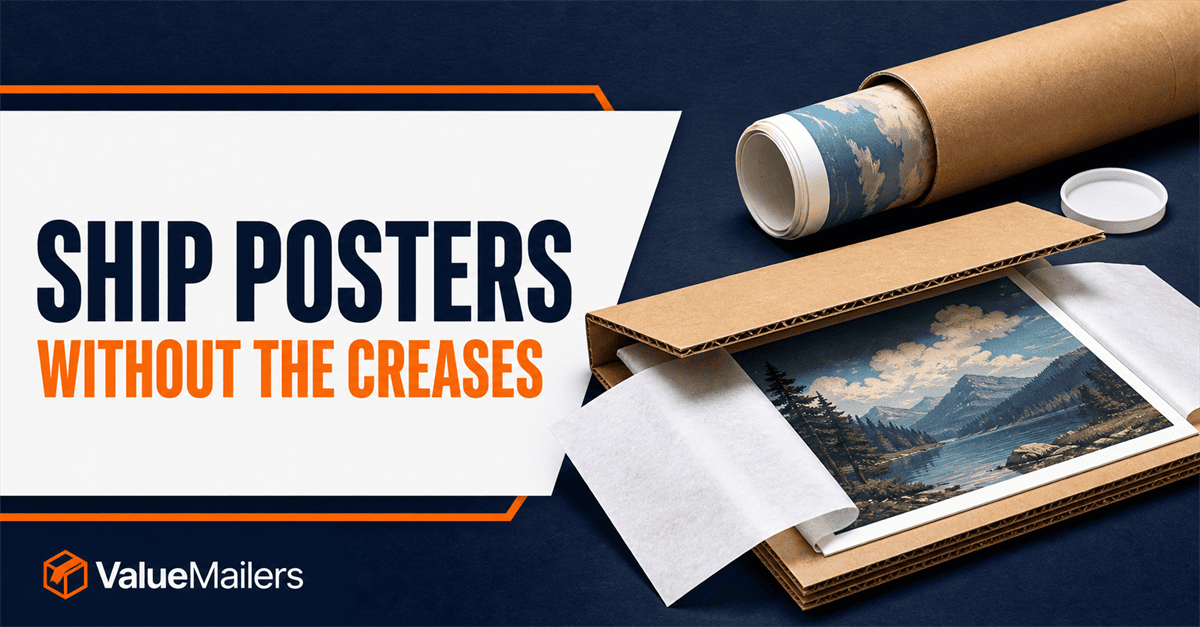
Decide whether to ship posters rolled or flat
Before choosing packaging, look at the poster itself.
Ship a poster rolled when it is flexible enough to curve without cracking or permanently creasing. Rolled shipping can be a practical choice for larger, standard paper posters, especially when the customer does not need the print to arrive perfectly flat.
Ship a poster flat when it is printed on heavyweight stock, has a premium finish, is signed or numbered, or is likely to be damaged by rolling. Flat shipping is also the better choice for small-format art prints, photographs, collector posters, and anything a customer may want to frame immediately.
A framed poster should always ship in a protective box with cushioning and corner protection. Glass, acrylic, and frame edges need more protection than the printed artwork alone.
How to ship posters flat
Flat poster shipping is about rigidity. The print should be protected on both sides, held securely in place, and packed so it cannot bend under normal handling pressure.
1. Protect the print surface
Place the poster in a clean protective sleeve or between smooth sheets of packing paper. Avoid letting adhesive, rough cardboard, or packing tape touch the printed surface.
For art prints with delicate finishes, add a clean layer of Packing Tissue Paper between the artwork and any rigid backing. Tissue helps reduce scuffing without adding bulk.
2. Add rigid support on both sides
Use two pieces of rigid board that are slightly larger than the poster. The extra border matters because it protects edges and corners from impact.
For smaller posters, photos, and art prints, Stay Flat Mailers can provide a simple all-in-one solution. Choose a mailer with enough room for the print and protective layers, but not so much extra space that the contents slide around.
3. Secure the package without over-taping
Keep the artwork and backing boards aligned, then use small pieces of low-tack tape on the outside of the protective wrap—not directly on the poster. The objective is to prevent shifting, not to compress the print.
4. Use a rigid outer package
A rigid mailer may be enough for low-risk, lightweight prints. For more valuable pieces or posters traveling farther, place the protected print inside a right-sized White Corrugated Box. A snug box minimizes movement and can give the shipment a more polished presentation.
How to ship rolled posters
Rolling works best for flexible posters that can safely curve. Do not roll thick cardstock, brittle paper, or prints with finishes that may crack.
Start with a clean sheet of packing paper larger than the poster. Lay the print face down on the paper, then roll it gently and evenly. Avoid making the roll too tight, which can create curl marks or stress the paper.
Secure the roll with a small amount of tape on the outer protective paper. Never place tape directly on the poster. Place the protected roll into a sturdy mailing tube or a long, narrow corrugated shipping box. Add light void fill at each end so the poster cannot slide and strike the caps or box walls.
When printing your label, place it along the length of a tube or long package where the barcode can lie as flat as possible. Use clear, easy-to-scan Shipping Labels and keep labels away from seams, corners, and heavily curved areas.
How to ship framed posters
Framed posters need a stronger packing system because there are multiple damage risks: broken glazing, crushed corners, scratched frames, and punctures.
First, protect the front of the frame with a clean layer of paper. Then wrap the full frame in bubble cushioning, paying special attention to the corners. Corner protectors are especially useful for wood, metal, and ornate frames.
Next, choose a Corrugated Mailer Box that leaves room for protective cushioning on every side. Fill empty areas so the frame cannot shift. The box should be sealed across all seams with quality packing tape.
For high-value framed art, consider a double-box method: pack the protected frame in one box, then place that box inside a larger outer shipping box with cushioning between them.
Choose the right poster packaging for each order
- Flexible, standard posters: roll and ship in a sturdy tube or long corrugated package.
- Premium art prints and signed posters: ship flat with rigid backing and a stay-flat mailer or box.
- Small square prints: consider the same rigid protection used for record mailers, especially when the artwork is close to record-jacket dimensions.
- Framed posters: use bubble cushioning, corner protection, void fill, and a properly sized corrugated box.
- Multiple posters: protect each print individually, then keep the stack rigid and secured so pieces cannot rub together.
Avoid common poster shipping mistakes
The most common mistake is using packaging that is too flexible. A thin envelope may save material cost, but it does little to protect a poster from bends and corner damage.
Also avoid oversized boxes. Too much open space allows prints and frames to shift during sorting and delivery. Right-sized packaging generally uses less void fill, improves protection, and can help control shipping costs.
Finally, inspect every package before it leaves the packing station. Check that the poster is clean, protected on both sides, unable to move inside the package, sealed securely, and labeled on a smooth, visible surface.
Build a reliable poster-shipping process
A consistent packing method helps ecommerce sellers reduce damage claims and deliver a better unboxing experience. Keep the right mix of rigid mailers, corrugated boxes, protective paper, cushioning, tape, and labels within reach.
With dependable Packaging Supplies, you can match each poster to the right level of protection—whether it ships rolled, flat, or framed.