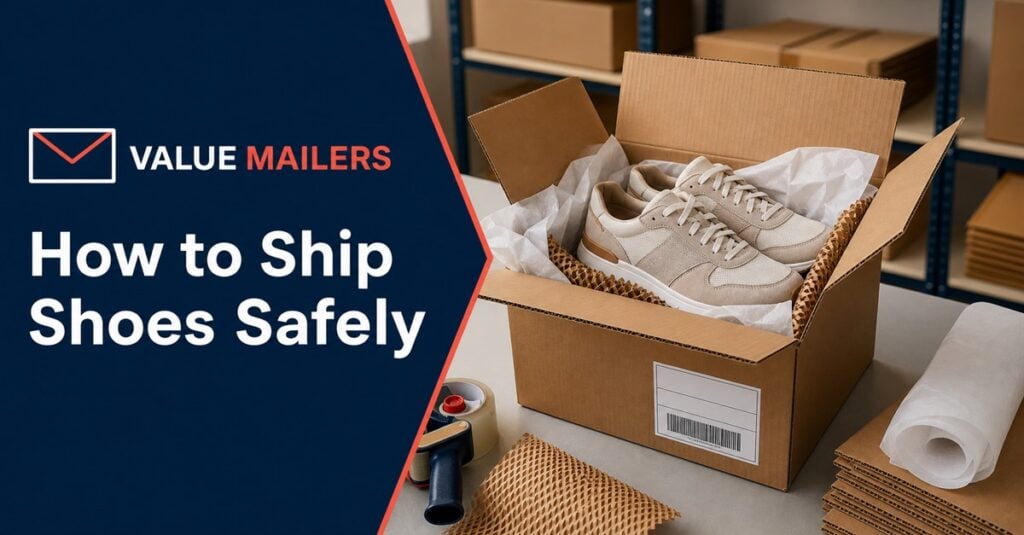
Selling shoes online means shipping more than footwear. A clean original shoebox, uncreased uppers, and unscuffed soles all shape the customer’s first impression. The best way to ship shoes is usually to protect the pair inside a properly sized inner box, then place that box in a snug corrugated shipping box with enough cushioning to stop movement.
That approach works for new sneakers, resale finds, dress shoes, and many boots. It also helps protect the retail box when the box is part of the product’s value. The goal is simple: keep the shoes clean, supported, and still from the moment they leave your packing table until the carrier delivers them.
Choose the package by the shoe, not by habit
A shipping carton should fit the packed footwear—not just whatever box is closest. Start with the shoes’ retail box if there is one, then measure the outside dimensions. Choose an outer carton that leaves a small, even amount of space for cushioning on every side. If there is no retail box, select a corrugated carton that lets you wrap and support the pair without bending or compressing it.
| Order type | Best outer package | Why it works |
|---|---|---|
| Sneakers or dress shoes in a retail box | Brown Corrugated Boxes | Protects the retail box from crush damage and gives cushioning room. |
| Premium shoes, collectors’ pairs, or pristine original boxes | White Corrugated Boxes | Provides a clean, rigid presentation with shipping protection. |
| Flats, sandals, or unboxed lightweight footwear | A close-fit corrugated shipping box | Prevents the pair from being crushed or scuffed in transit. |
| One small accessory packed with shoes | Bubble Pouches inside the box | Separates the accessory so it cannot rub against the shoes. |
Do not rely on a shoebox alone as the mailing carton. Retail shoeboxes are made to present merchandise, not necessarily to withstand sorting equipment, stacking, moisture, or impacts. A close-fitting shipping box is the safer choice.
How to package shoes for shipping in six steps
1. Inspect and document the pair
Before packing, check both shoes for loose laces, dirt, scuffs, or a damaged sole. For resale, take clear photos of the shoes and the original box before sealing the shipment. This gives you a record of their condition if a customer reports a transit issue.
Remove loose store stickers if appropriate, tuck in laces, and make sure the shoes are dry. Never seal damp footwear into a package.
2. Support the shape of each shoe
Lightly fill the toe box and any hollow areas with clean packing tissue paper. The fill should support the shape, not stretch the upper or force the shoe out of shape. Tissue between patent leather, polished leather, hardware, or delicate embellishments also helps prevent rubbing during transit.
For heels, boots, or shoes with buckles, wrap the parts that could make contact with the other shoe. A small bubble pouch or a tissue layer keeps hard details from scuffing soft leather or fabric.
3. Wrap and pair the shoes carefully
Wrap each shoe separately in tissue when surface finish matters, then place them sole-to-sole or heel-to-toe as the shape allows. This reduces direct rubbing. If you are shipping a high-value pair, add a light protective layer around each shoe before placing it in the inner box.
Avoid using tape directly on shoes, tissue, or the retail box. It can leave residue, pull up a finish, or make the unboxing experience frustrating.
4. Secure the inner shoebox—or create one
If the pair includes its original box, place the wrapped shoes inside and check the fit. The shoes should not rattle. Fill only the empty space needed to hold them in position, then close the lid squarely.
For shoes without a retail box, use a sturdy, close-fit carton from the brown corrugated box selection. Keep enough space around the pair for a protective layer, but do not choose a large carton that creates a cavity to fill.
5. Double-box when the retail box matters
Place the sealed inner box inside the outer corrugated carton. Add tissue, paper, or cushioning around all sides until the inner box cannot shift when you gently shake the closed outer carton. The outer carton should close without bulging or crushing the shoebox.
Double-boxing is especially worthwhile for collectible sneakers, luxury footwear, a gift order, and any shipment where a clean original box is part of the sale. It is the same principle behind using purpose-built Record LP Mailers for vinyl: a rigid outer package protects a presentation-sensitive item and its edges. Shoes need a box sized to their three-dimensional shape rather than a flat record mailer.
6. Seal, label, and perform a final check
Seal the outer box with packing tape appropriate for the carton and shipment weight. Cover the center seam and reinforce other seams when the box is heavy or the carrier requires it. Then apply a clear, readable label to the largest flat side—not across an edge, seam, or corner.
Use Shipping Labels that give the barcode a smooth, scannable surface. Before handing off the parcel, confirm the address, service, packed weight, and package dimensions. Accurate measurements help you compare carrier options and avoid unexpected adjustments.
When can you ship shoes without the original box?
You can ship shoes without the original box when it is not part of the listing or sale. In that case, each shoe still needs individual surface protection and a rigid outer carton. Do not put loose shoes straight into a poly mailer. A soft mailer does not prevent crushing, and hardware or soles can puncture it.
A poly mailer can be useful as a moisture-resistant outer layer around a well-protected shoebox for an appropriate shipment. It is not a substitute for a shipping carton when the shoes or their box need crush protection. For the same reason, bubble mailers are better suited to small, lightly padded accessories than to a full pair of shoes.
Pack special footwear with a little extra care
Sneakers: Protect the toe box and keep laces from rubbing on the upper. If the original box is collectible, double-box it.
Dress shoes and leather footwear: Use tissue between shoes and around buckles or hardware. Keep the pair away from loose paper that could rub during transit.
High heels: Wrap the heels and any pointed toes individually. Make sure heels cannot punch into the opposing shoe or box wall.
Boots: Support shafts gently so they do not collapse or crease. Use a taller shipping box instead of forcing boots into a shallow one.
Kids’ shoes and sandals: A compact carton still matters. Small shoes can slide around in an oversized box just as easily as adult footwear.
Common shoe-shipping mistakes to avoid
- Mailing the retail shoebox without a protective outer carton.
- Choosing an oversized shipping box and trying to solve the fit with excessive filler.
- Letting shoes touch directly when hardware, buckles, or textured soles can scuff the finish.
- Applying a shipping label over an edge, seam, or damaged carton surface.
- Forgetting to include the packaging weight and dimensions when purchasing postage.
- Using a poly mailer as the only protection for shoes that can crush, bend, or puncture the bag.
A simple shoe-shipping checklist
- Inspect and photograph the pair and original box.
- Add tissue to support toes and separate sensitive surfaces.
- Secure the shoes in a shoebox or close-fit inner carton.
- Choose an outer corrugated shipping box with modest room for cushioning.
- Fill gaps until nothing shifts in a gentle shake test.
- Tape the outer carton securely and apply a flat, scannable label.
- Verify address, service, weight, and dimensions before carrier handoff.
Frequently asked questions
What is the best way to ship shoes?
For most pairs, wrap and support the shoes, place them in an inner shoebox or close-fit carton, then ship that inside a snug corrugated box. This protects the footwear and preserves an original shoebox when it matters.
Should I double-box shoes?
Yes, when the original box is part of the product value, the shoes are premium or collectible, or the retail box needs to arrive clean and square. For an unboxed pair, a single correctly sized corrugated carton with appropriate cushioning can be enough.
Can I ship shoes in a poly mailer?
Use a poly mailer only as an outer moisture barrier around a protected inner box when the shipment is suitable for it. Do not use it as the only package for footwear that needs crush or scuff protection.
How do I stop shoes from scuffing during shipping?
Wrap each shoe separately with tissue, protect buckles and heels, and keep the pair from moving inside the box. A snug fit and a final shake test are more reliable than adding large amounts of loose filler.
Build a repeatable footwear packing workflow
The right shoe packaging is not necessarily the most elaborate setup. It is a repeatable system: clean footwear, appropriate tissue, a close-fit box, enough cushioning to stop movement, and a clear label. Stock the right mix of shipping supplies so your team can pack each order consistently and protect the customer experience from the first scan to delivery.