Shipping vinyl safely comes down to three things: a mailer made for records, a snug fit that limits movement, and enough rigid support to protect the jacket corners. Standard boxes and padded envelopes may work for other products, but vinyl needs packaging designed to keep a flat, vulnerable item secure during carrier handling. Whether you run a record store, sell occasional LPs online, or fulfill collectible orders at scale, this guide explains how to ship vinyl records with fewer damage claims and better customer experiences.
How to ship vinyl records safely with a purpose-built mailer
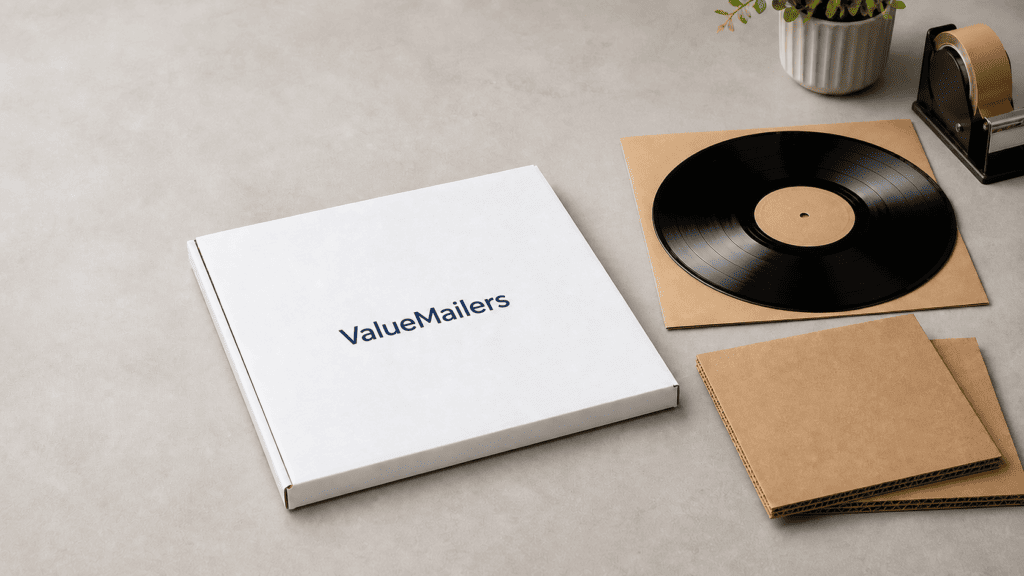
The most reliable choice is an LP record mailer sized specifically for vinyl albums. Record mailers support the square footprint of an LP jacket and provide more consistent protection than trying to adapt an oversized shipping box. For single LPs and smaller bundles, multi-depth bookfold mailers are especially practical. The mailer folds around the contents, helping reduce unused space without requiring a separate carton. Choose a depth that closes securely without forcing the seams or compressing the album jacket. A record mailer should be large enough to accommodate the LP and protective inserts, but not so large that the contents can slide from side to side. Empty space is one of the most common causes of damaged corners.
Protect the record and jacket separately
Before placing the LP in its mailer, inspect the record sleeve and jacket. For collectible, used, or high-value vinyl, it is often wise to remove the record from the outer jacket and place it in an inner sleeve behind the jacket. This can help prevent the vinyl from cutting through the jacket seam if the package is dropped. Use a clean protective sleeve or a layer of packing tissue between surfaces that could scuff. Avoid placing adhesive directly on an album cover, printed sleeve, or shrink wrap. The goal is not to add excessive layers; it is to prevent the record, jacket, and packaging components from rubbing or shifting during transit.
Add corrugated pads to protect corners
Corrugated inserts add stiffness above and below the record, helping spread impact across a wider surface. They are particularly useful for collectible albums, multi-record orders, and shipments that may travel long distances. For 45 RPM records, corrugated filler insert pads add support inside compatible record mailers. For LPs, use inserts that extend close to the edges of the jacket without creating pressure points.
A simple packing sequence
- Place a corrugated pad in the mailer.
- Add the protected record and jacket.
- Place another pad on top.
- Close the mailer at the depth that fits the order.
- Seal all required edges securely.
This sandwich-style setup helps prevent bending and reduces the chance of crushed corners.
Keep the package snug without overpacking
A good vinyl shipment should feel secure when gently moved, but it should not be packed so tightly that the mailer bows or the edges bulge. Too much pressure can crease corners; too much empty space allows the album to move. Use a mailer with an adjustable depth whenever the order thickness varies. A single LP, a gatefold jacket, and a multi-record set do not require the same amount of space. Multi-depth record mailers and bookfold mailers make it easier to fit the package to the item instead of filling a large box with unnecessary material. If a record needs extra cushioning, add a light layer of bubble cushioning wrap around the protected album before it goes into the mailer. Keep the bubble layer modest so it cushions impacts without making the package too thick or unstable.
Seal every opening that could catch in transit
Once the record mailer is closed, inspect every flap and seam. Use quality packing tape on openings that could lift, snag, or separate during handling. Apply tape smoothly and avoid covering important product details or creating bulky tape wads at the corners. For higher-value orders, reinforce the outer seams without wrapping the entire package in tape. Excessive tape makes packages harder for customers to open and can tear artwork if the mailer must be opened for inspection. Use a flat, readable shipping label placed on the largest uninterrupted surface. The label should not fold over an edge, cover a seam, or sit on top of wrinkled tape.
When a shipping box is the better choice
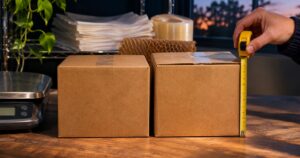
Most individual LPs fit well in record mailers. However, a larger order may require a more substantial outer carton. Use brown corrugated shipping boxes when shipping several records, boxed sets, framed music memorabilia, or an order that includes other merchandise.
- Choose the smallest box that safely holds the protected order.
- Add corrugated pads around the LPs before adding void fill.
- Fill remaining space so contents cannot shift.
- Seal the center seam and edge seams with packing tape.
- Keep the shipping label flat and fully visible.
A box is not automatically safer than a mailer. The best packaging is the option that matches the order’s dimensions, weight, value, and risk of movement.
Avoid common vinyl shipping mistakes
Using only a padded envelope
Bubble mailers provide cushioning, but they do not provide enough rigid edge protection for most vinyl records.
Shipping an LP loose inside a large box
A large box with too much empty space allows corner impacts and movement.
Skipping corrugated reinforcement
A record mailer is stronger with pads above and below the album, especially for collectible vinyl.
Overfilling the package
Forcing a thick record stack into a shallow mailer can stress seams and crush jacket edges.
Build a repeatable packing process
For sellers who ship records regularly, consistency matters as much as the individual materials. Keep record mailers, corrugated inserts, tape, and shipping labels together at the packing station. Train each team member to follow the same basic steps: inspect, sleeve, reinforce, fit, seal, and label. A repeatable process helps protect the product, makes fulfillment faster, and gives customers confidence when their records arrive in excellent condition. Start with the right record mailers, use properly sized reinforcement, and select shipping supplies based on the order—not a one-size-fits-all packing routine.
For broader carrier preparation guidance, review USPS package preparation tips before shipping.
A practical answer to how to ship vinyl records is to choose a fitted mailer, add rigid pads, and remove unused space. When learning how to ship vinyl records for valuable albums, test the finished package with a gentle shake before applying the shipping label.