
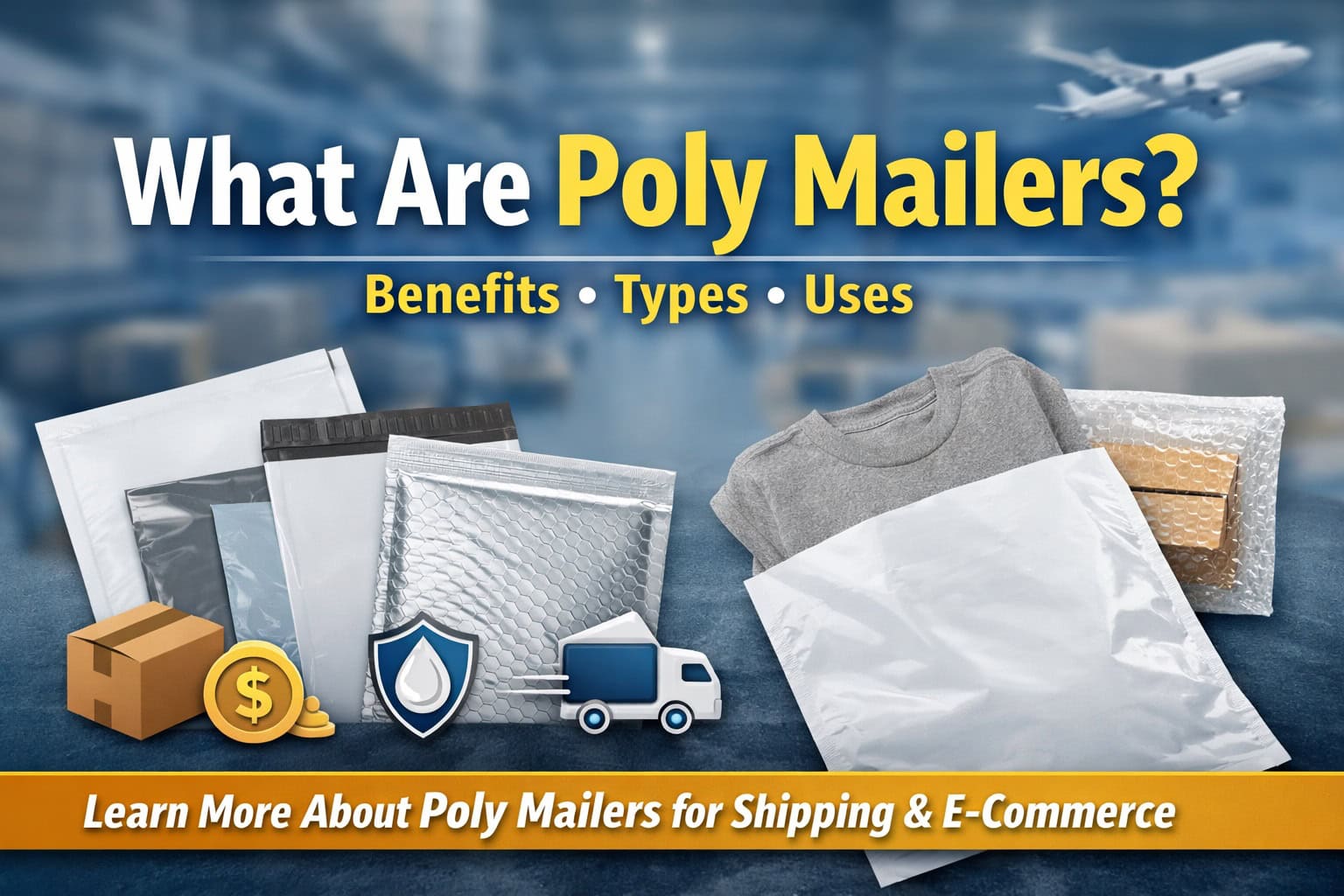
Direct answer: This poly mailer thickness guide gives online sellers one clear rule: choose mailer strength by product weight, edge sharpness, and handling risk, with thicker mailers for heavier apparel, boxed goods, and long-distance shipments.
This poly mailer thickness guide is for ecommerce sellers, Amazon sellers, eBay sellers, Etsy sellers, Walmart sellers, small warehouses, and shipping departments that need packaging rules a real packer can use during a busy day.
Good packaging protects the product, controls postage, and keeps the customer experience clean. The best choice depends on product shape, order value, damage risk, carrier handling, and the supplies already stocked at the packing station.
Related ValueMailers supplies: bubble mailers, corrugated boxes, record mailers, poly mailers, and shipping labels.
poly mailer thickness guide quick checklist
- First, match the package to the product before buying postage.
- Next, keep the item from shifting, bending, crushing, or tearing through the package.
- Then, choose poly mailers for soft goods and corrugated boxes for structure.
- Also, use bubble mailers or bubble roll when padding is needed.
- After that, keep shipping labels flat, readable, and easy to scan.
- Finally, review returns, damage claims, and postage changes before reordering supplies.
Why this poly mailer thickness guide matters for ecommerce shipping
A practical poly mailer thickness guide gives the packing team a repeatable rule. It prevents guesswork, keeps orders moving, and helps new employees make the same decision as experienced packers.
The cheapest package is not always the lowest-cost package. If a mailer tears, a box crushes, or a label fails to scan, the business can lose time, postage, product, and customer trust. Better packaging decisions reduce those problems before the order leaves the building.
poly mailer thickness guide comparison table
| Situation | Best supply | Reason |
| Soft apparel or fabric goods | Poly mailer | Keeps size and weight low |
| Small items needing padding | Bubble mailer | Adds cushion without a box |
| Rigid or crush-sensitive goods | Corrugated box | Provides structure and stacking strength |
| Vinyl records | Record mailer | Protects flat corners and edges |
| Every outbound shipment | Shipping labels | Supports clean carrier scans and tracking |
Best packaging choices for common orders
Choose poly mailers for flexible goods that do not need crush protection. Bubble mailers work for small products that need light padding. Corrugated boxes fit items that should not bend, need corner protection, or require stacking strength.
Record mailers should be used for vinyl orders because they protect flat edges better than improvised boxes. Bubble roll, kraft paper, or other fill should be used only after the box size is right.
Poly mailer thickness guide by order type
Light apparel can usually use standard poly mailers. Hoodies, denim, and multi-item apparel orders need stronger mailers. Boxed soft goods may need thicker film because corners can press into the mailer during transit.
How thickness affects postage and protection
A thicker mailer can reduce tears, but it should not replace the right package. If the item can bend and is not fragile, poly mailers help keep postage low. If the item needs structure, move to a corrugated box instead.
When to use bubble mailers instead
Use bubble mailers when the item is small and needs surface padding. Use corrugated boxes when crushing is the concern. Poly mailers are best when the product is soft, flexible, and not likely to puncture the film.
How to use this poly mailer thickness guide with ValueMailers supplies
Build a simple packaging station around the supplies used most often. Keep common poly mailers, bubble mailers, corrugated boxes, shipping labels, tape, and cushioning close to the work area. Store specialty supplies such as record mailers where packers can find them quickly.
This poly mailer thickness guide also helps purchasing. If one size runs out often, make it a core item. If one package creates damage claims or postage problems, replace it with a better-fitting option.
Related ValueMailers supplies: bubble mailers, corrugated boxes, record mailers, poly mailers, and shipping labels.
Helpful outside reference: review carrier and small business packaging guidance.
Common mistakes to avoid
- First, avoid choosing the closest supply instead of the right supply.
- Next, do not put rigid or fragile products in flexible mailers.
- Also, avoid oversized boxes that raise postage.
- Instead, choose the right box before adding extra fill.
- Then, keep shipping labels away from seams, edges, and curves.
- Finally, move slow-selling supplies out of prime packing space.
Suggested ValueMailers category links
- Bubble mailers for padded small-item shipments.
- Poly mailers for apparel and soft goods.
- Corrugated boxes for structure and crush resistance.
- Record mailers for vinyl LP shipments.
- Shipping labels for packing stations and daily fulfillment.
Training packers with this poly mailer thickness guide
Training should use real examples. Show one order that belongs in a mailer, one that needs a box, and one that needs extra protection. Then explain the reason behind each choice.
Keep the rule visible near the packing station. When a package fails, review the package size, product movement, cushioning, label placement, and carrier handling. The point is to improve the rule, not blame the packer.
How to measure whether the poly mailer thickness guide is working
Track damage claims, return reasons, replacement shipments, customer comments, postage changes, and packing speed. If damage falls and shipping cost stays controlled, the packaging rule is working.
If one product keeps causing problems, give that product its own packing rule. Evergreen packaging pages are useful because they turn repeated shipping decisions into a steady system.
Practical packing example for this poly mailer thickness guide
First, place the product on the packing table and compare it with the standard supply list. Next, choose the smallest safe mailer or box before you print the label.
For example, a soft apparel order can usually move into a poly mailer. However, a boxed collectible needs corrugated protection because corners can press through a flexible bag.
In addition, the packer should check the label surface before closing the order. As a result, the shipment leaves with cleaner scans and fewer customer questions.
Finally, review one or two completed packages at the end of the day. Therefore, the poly mailer thickness guide becomes a working rule, not just a page of advice.
FAQ about poly mailer thickness guide
What is the most important rule in a poly mailer thickness guide?
Choose poly mailer thickness by product weight, edge sharpness, and handling risk. Thin mailers fit soft lightweight goods, while thicker mailers are better for heavier apparel, boxed items, and long-distance shipments.
Which supplies should ecommerce sellers compare first?
Compare poly mailers, bubble mailers, corrugated boxes, record mailers, shipping labels, and cushioning as one packaging system.
How often should packaging rules be reviewed?
Review packaging rules monthly, after damage claims, or whenever product mix, carrier cost, or marketplace volume changes.
Should small businesses standardize packaging sizes?
Yes. Standard sizes make buying easier, speed packing, and reduce mistakes at the shipping station.