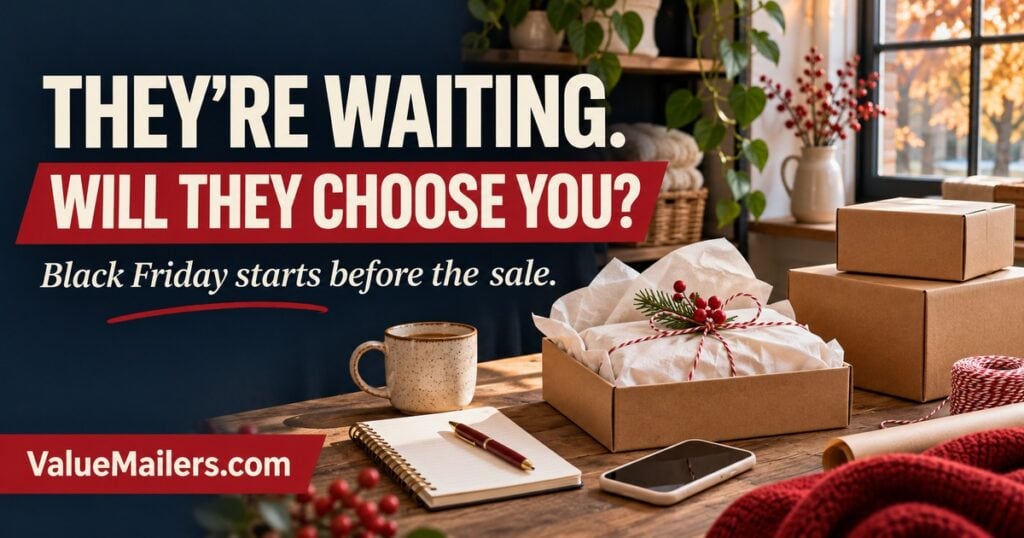
A shopper finds your store, likes a product and leaves. The reason may be sitting on their calendar: Black Friday.
For a small business, early November can feel like a waiting room. You are ready to sell. Customers are ready to compare. Everyone seems to be watching for the next offer.
But waiting shoppers are still making decisions. They are building gift lists, judging stores and deciding which businesses deserve another visit.
The opportunity is to become the shop they remember before the loudest sale weekend begins.
The Holiday Shopping Waiting Game Is Real
In an October 27 update, the National Retail Federation reported that 64% of consumers said they were likely to wait until Thanksgiving weekend sales to do most of their holiday shopping. At the same time, 43% planned to begin before November.
Those findings can coexist. A customer can buy an early gift and still save most of their shopping for later. The survey describes intentions, not completed purchases or the behavior of every visitor to your store.
For small retailers, the useful question is this: what would make buying from your business easier today?
Give the Shopper a Finished Gift, Not Another Decision
Picture someone shopping for three coworkers. They have a budget, a short lunch break and no interest in scrolling through 80 products.
A small collection called “Thoughtful Gifts Under $30” gives that person a starting point. A clearly described gift set takes another decision off the list.
You do not need to discount everything to try this. Group suitable products by recipient, purpose or budget. Show exactly what is included. If packaging or a gift note costs extra, say so before checkout.
A soap maker could present a two-bar gift set. A stationery store could pair a compact notebook with matching accessories. A hobby shop could organize small gifts for beginners.
These are merchandising ideas to test, not guaranteed ways to increase sales. Choose combinations that fit your stock, costs and customers.
Answer the Questions That Hold an Order Back
Imagine that shopper has found the right gift. Now the doubts begin.
How big is it? Will the recipient need another part? Does it come in a presentation box? How much is delivery? What happens if it is the wrong choice?
Look at your busiest product pages through that person’s eyes. Add accurate dimensions, clear pack counts and photographs that show what the buyer receives. Put shipping and return information where shoppers can find it.
Use specific dispatch information that your operation can meet. A dispatch promise and a delivery promise mean different things. Do not guarantee arrival before a holiday unless the complete service supports that commitment.
Clear answers give visitors something useful while they compare prices elsewhere.
Make the Next Visit Worthwhile
Some customers will still wait. Give them a simple way to come back.
Invite visitors to join a holiday email list, with a clear explanation of what they will receive. Share a useful gift guide with people who have opted in. If your store offers a working save-for-later feature, make it easy to find.
Keep the message helpful: new gift ideas, genuine stock updates or the actual dates of a planned promotion.
A countdown should reflect a real deadline. A “last few left” message should reflect real inventory. Your customer may be comparing dozens of shops; consistent, accurate information is part of earning their trust.
Pack the Promise You Made
The order finally arrives. Now the product page becomes a physical package.
If you sold a tidy gift set, plan how the pieces will sit together. If you promised a personal note, make it part of the packing instructions. If several people pack orders, keep a sample layout nearby.
Choose the outer package after allowing for the protection inside it. Small accessories may suit bubble mailers. Other orders need corrugated shipping boxes with suitable cushioning.
For a compact carton example, read the everyday story of a 6×4×4 shipping box. Measure the wrapped goods and test the complete package before settling on a size.
A familiar packing method can also make it easier to prepare repeat orders without deciding every detail again.
A Small Experiment Before the Big Weekend
Choose one product or gift set this week. Give it a clear audience, a complete description and an honest delivery message. Share it with your existing audience, then watch what happens.
Compare visits, purchases, customer questions and the margin left after product, packing and shipping costs. A busy order list is useful only when the work makes financial sense.
If visitors keep asking the same question, improve the page. If they buy, make sure the promised packing process works. If they wait, you have learned something before the busiest weekend.
Black Friday may be when shoppers plan to spend. Early November is when you can give them a reason to choose you.