Shipping art prints safely comes down to controlling four risks: bending, corner impacts, surface scuffs, and moisture. The most reliable approach is to protect the print surface first, add enough stiffness to resist flexing, choose a snug flat mailer, and eliminate movement before sealing.
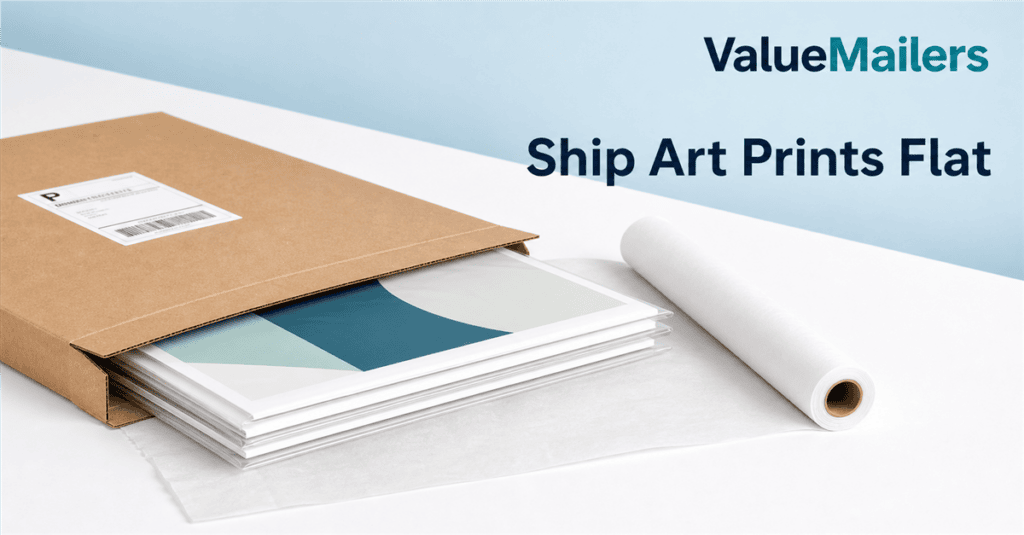
For most unframed prints, photos, postcards, certificates, and small illustrations, shipping flat in a rigid mailer creates a better arrival experience than rolling the item. The recipient can inspect or frame the print right away, without waiting for it to flatten. The important part is treating the mailer as one layer of protection—not the entire packing system.
Start with the print’s condition and size
Before choosing supplies, measure the finished print, including any mat, backing board, sleeve, or insert that will ship with it. Select a mailer with enough room for that complete stack, but not enough empty space for the print to slide from side to side.
Also inspect the print before packing. Make sure ink, paint, or coatings are fully dry. A clean slip sheet or protective sleeve helps keep the printed surface from rubbing against another print, a backing board, or the inside of the package. This small step is especially useful for matte finishes, dark artwork, and limited-edition prints that show fingerprints or abrasion easily.
Build a flat-shipping sandwich
An effective art print package uses layers, each with a distinct job:
- Surface protection: Place the art in a clear sleeve or cover its face with a clean sheet of tissue paper. This helps guard against scuffs and transfer.
- Stiff backing: Put a firm board behind the print. For higher-value or more flexible prints, use a second board on the front to create a protective sandwich.
- Corner protection: Keep the print centered and prevent the corners from meeting the mailer edges. A slightly larger backer or carefully placed corner guards can help.
- Rigid outer package: Place the stack in a sturdy flat mailer and seal it without forcing the flap.
The package should feel secure when gently tilted. If the stack shifts, add a slim spacer or choose a mailer that fits more closely. Avoid filling a flat package with bulky loose material; it can create pressure points and make the mailer harder to keep flat.
Choose a rigid mailer for small and medium prints
For bend-sensitive pieces, Stayflats® Photo Mailers are a practical starting point. These rigid mailers are designed for photos, documents, prints, and other flat items that need help resisting bends during mailing and storage. ValueMailers offers multiple sizes, so it is easier to match the package to the artwork instead of making a print fit an oversized envelope.
Choose a mailer that leaves a modest border around the protected print. A too-small mailer can crush edges or strain the closure. An oversized mailer can allow the print to gain momentum when the package is dropped. Test one fully packed sample before making a new mailer size part of your standard process.
Rigid mailers work particularly well for small art prints, photographs, stationery sets, and certificates. For a thicker order—such as a framed piece, a deep canvas, or a print bundled with bulky merchandise—move up to a suitable corrugated shipping box. A box leaves room for protective spacing on every side and is the better choice when the item can be crushed, not just bent.
Do not rely on a bubble mailer alone for a print
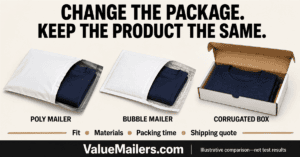
Bubble mailers provide useful cushioning, but cushioning and rigidity solve different problems. A padded envelope can reduce light scuffs and handling impacts; by itself, it does not reliably prevent a flat print from flexing.
If an order includes a small add-on, a Poly Bubble Mailer can be a good fit for that accessory or for a sleeved, backed print that already has a rigid core. Its poly outer layer is also useful when moisture resistance is a priority. For art that must arrive flat, however, retain the rigid board-and-mailer structure inside.
The same principle applies to record mailers. Record Mailers are purpose-built for the dimensions and edge protection needs of vinyl records; they are not a substitute for an art-print mailer unless the contents genuinely match the mailer’s intended size and format. Matching the package to the product is safer than trying to make one format cover every order.
Keep moisture and handling marks in perspective
A sleeve or other clean barrier inside the package helps protect the print from humidity, wet porches, and incidental contact. Seal the outer mailer fully and press the adhesive closure firmly. If the destination, season, or product value makes moisture a larger concern, consider an additional protective bag around the sleeved print before it goes into the rigid mailer.
“Do Not Bend” and fragile markings can communicate handling needs, but they should never replace real structural protection. Automated equipment and normal transit pressure can still bend a weak package. Build the protection into the packaging, then use markings only as a helpful extra cue.
Apply the label on the flattest, cleanest panel
After sealing, apply a clear shipping label to the largest flat exterior panel. Keep it away from seams, folded edges, and any area that could wrinkle. A smooth application helps barcode scanners read the label and keeps the package looking professional.
Shipping Labels from ValueMailers include options for common fulfillment workflows, from address and shipping labels to thermal formats. Use the label size that fits the mailer without covering important handling information or wrapping around an edge.
Before the package leaves, check that the address is readable, the barcode is unobstructed, and old labels or markings are fully removed or covered. For higher-value artwork, compare carrier options and add tracking or declared-value coverage when appropriate for the shipment.
When to ship art prints flat versus rolled
Shipping flat is usually the better choice when the print can fit in a rigid mailer or flat package without excessive size or weight. It helps preserve the presentation of smaller and medium-size work, especially prints that buyers expect to frame immediately.
Rolling can make sense for larger posters or prints when a flat package would be too large or prone to flexing. If rolling, use a wide enough tube that the print is not tightly curled, protect the print surface with a clean interleaf, and protect both tube ends. Do not force a large print into a flat mailer that cannot stay rigid through normal handling.
A repeatable packing checklist
Use this quick check before handing off an art-print order:
- Is the print fully dry, clean, and protected by a sleeve or slip sheet?
- Does the print have rigid backing, with a second board if needed?
- Is the mailer only slightly larger than the protected stack?
- Can the contents stay in place without rattling or sliding?
- Are corners protected from direct contact with the mailer edge?
- Is the closure flat, secure, and not under strain?
- Is the shipping label smooth, readable, and clear of seams?
The right packaging protects both the artwork and the customer experience
The best way to ship art prints is not to add the most material. It is to use the right layers in the right order: surface protection, rigidity, snug fit, and a clearly labeled outer mailer. With a repeatable workflow and the right packaging supplies, sellers can pack faster while giving prints a better chance of arriving clean, flat, and ready to enjoy.
Frequently asked questions
What is the best way to ship art prints?
For most small and medium unframed prints, use a protective sleeve or slip sheet, firm backing board, and a rigid stay-flat mailer. The package should fit closely enough to prevent movement without compressing the print.
Can I ship art prints in bubble mailers?
Bubble mailers can add cushioning, but they are not enough by themselves for bend-sensitive art. Use a rigid board-and-mailer system for prints that need to remain flat.
Should I put “Do Not Bend” on art print packaging?
It can be a useful handling cue, but it is not a replacement for rigid packaging. Build bend resistance into the mailer and backing layers first.
How much larger should a mailer be than an art print?
Choose a mailer that accommodates the print after its sleeve and backing are added, with a modest border for safe insertion and sealing. Test the finished package to make sure the contents do not slide or press against the edges.