Knowing how to ship cookware safely starts with a simple fact: cookware is built for heat, not for a parcel network. A cast-iron skillet can dent a box, a loose lid can chip enamel, and a long pan handle can punch through insufficient cushioning. Even lightweight cookware can arrive scratched or warped when pieces rub together inside an oversized carton.
The safest approach is simple: protect each surface, separate every moving part, and use a corrugated shipping box that leaves room for cushioning without creating a heavy, loose package. This guide explains how to ship cookware safely for ecommerce orders, resale shipments, gifts, and returns.

Start with the cookware’s real shipping risks
Before deciding how to ship cookware safely, sort the order by weight, finish, and shape. That tells you how much protection it needs.
Heavy cookware includes cast iron, carbon steel, stoneware, and full Dutch ovens. These products can damage both themselves and their outer packaging if they shift. They need a strong box, robust cushioning, and an especially careful shake test.
Scratch- or chip-prone cookware includes enamel-coated cast iron, nonstick pans, polished stainless steel, glass lids, and ceramic bakeware. It needs a soft barrier between every contacting surface. A pan may survive a drop while its finish does not.
Awkward shapes include long-handled skillets, wok handles, lids with knobs, and sets with several separate pieces. Protect projections first, then stop the whole item from moving.
| Cookware type | Recommended outer packaging | Key protection step |
|---|---|---|
| Small utensils or replacement knobs | Bubble pouch inside a small corrugated box | Keep small parts contained and cushioned |
| One lightweight pan | Right-sized corrugated shipping box | Protect the cooking surface and handle |
| Cast-iron skillet or Dutch oven | Strong corrugated box with substantial cushioning | Prevent movement and reinforce around heavy edges |
| Pot-and-lid set | Corrugated box sized for the nested set | Separate lid, rim, and knob from the pot |
| Enamel, ceramic, or glass-lidded cookware | Corrugated box; double-box for high value | Cushion every side and immobilize the item |
For everyday orders, Brown Corrugated Boxes offer a practical range of shipping-box sizes. Sellers who want a clean presentation can use White Corrugated Boxes; the important choice is the interior fit, not the color. A box should allow cushioning on every side while staying compact enough to limit unnecessary void fill and dimensional weight.
How to pack pots and pans for shipping in six steps
1. Inspect, clean, and photograph the item
Make sure cookware is clean and completely dry. Check handles, rivets, rims, knobs, lids, and the cooking surface before it goes into packaging. For a used, collectible, or high-value item, take clear photos of its condition and the serial number or identifying marks, if any. This creates a useful record if you later need to answer a customer question or support a carrier claim.
Remove detachable handles, knobs, or accessories when the product allows it. Put each small part in its own sealed bag so it cannot scratch the cookware or disappear into the void fill.
2. Build a soft barrier around every finish
Wrap the cooking surface and exterior separately with clean tissue or a non-abrasive layer before adding thicker cushioning. Packing Tissue Paper is useful under a protective wrap because it helps keep polished, enameled, painted, and nonstick finishes from rubbing directly against another material.
Do not tape directly to the cookware or to retail packaging. Tape can leave residue, lift a label, or make a return difficult. Instead, tape the wrapping to itself.
For a skillet, give the pan body a full wrap and add extra protection around the handle, where leverage can concentrate force. For a Dutch oven, protect the rim and the lid separately. A glass lid deserves its own cushion layer; do not place it loose on top of the pot.
3. Separate lids, nested pieces, and sharp contact points
A fitted lid still moves in transit. Wrap it independently, with extra cushioning around the knob and rim, then position it so it cannot strike the pot. If you nest pans or pots to reduce package volume, place a protective layer between each piece and inside the smaller pan. Never stack bare metal, enamel, or nonstick surfaces together.
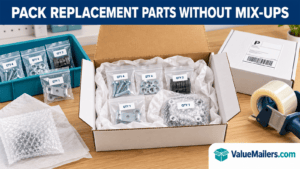
Small accessories such as replacement knobs, screws, and measuring tools can go into self-seal bubble pouches before being placed inside the main box. The pouch is an inner protective layer, not a substitute for a corrugated outer box when the order is heavy.
4. Choose a right-sized shipping box
The best way to ship cookware safely is to set the wrapped cookware in a new corrugated box with cushioning below it, around all sides, and above it. The item should never touch a box wall. If the carton is too small, normal pressure transfers directly to the handle, rim, or lid. If it is too large, a heavy pan can gain momentum and damage the carton from inside.
For a single skillet, choose a box with enough length for the handle plus protective material at both ends. For a Dutch oven or a cookware set, select a carton with enough depth to cushion the top and bottom. High-value enamel cookware, glass-lidded items, and unusually heavy cast iron often benefit from double-boxing: pack the immobilized inner box inside a larger outer box, then cushion the space between them.
The goal is controlled clearance, not maximum empty space. This same fit-first mindset helps ecommerce teams protect a wide range of products efficiently. Flat goods such as vinyl need purpose-built record mailers that limit movement at their own dimensions; heavy cookware needs a suitably sized corrugated box instead.
5. Immobilize the package and run a shake test
Fill remaining voids with a cushioning material appropriate to the product’s weight. Support the bottom, sides, top, and any projecting handle. The box should feel stable when lifted, and nothing inside should slide, rattle, or knock against a wall when you gently shake it.
If you can feel movement, reopen the package and add protection. A little extra time here is less costly than replacing a chipped Dutch oven or processing a return. For multi-piece cookware, test that no lid, pan, or accessory can reach another piece during motion.
6. Seal and label for a clean handoff
Close the carton and use packing tape that is appropriate for the package’s size and weight. Apply tape across the center seam and reinforce seams as needed. Do not rely on the product’s retail box as the sole shipping container, and do not use a soft mailer for pots, pans, or cookware with a rigid lid.
Finish with a clear shipping label on the largest flat panel. Keep the barcode smooth and easy to scan; avoid wrapping a label across a seam, box corner, or heavily wrinkled tape. A handling note can communicate an instruction, but good internal packaging—not a label—is what prevents damage.
Packaging advice by cookware type
How to ship cast iron cookware
When learning how to ship cookware safely, remember that cast iron is durable, but it is also dense. A skillet that shifts can tear through a weak carton, bend a handle, or damage another item in the same shipment. Wrap the pan, add extra cushioning around the handle and rim, and use a sturdy corrugated shipping box with no empty travel path inside.
For a Dutch oven, pack the lid separately from the body and protect the knob. If the pot has an enamel finish, treat it like a fragile surface even though the base material is heavy. Consider double-boxing for premium pieces, especially when the original retail box is not designed for parcel shipping.
How to ship nonstick pans
The cooking surface is the priority. Cover it with a soft, clean barrier before wrapping the pan, and keep it away from rivets, handles, and other cookware. Do not nest nonstick pans without a protective layer between each surface. A shallow but right-sized box often works better than a deep box filled with loose material.
How to ship pots, lids, and cookware sets
To understand how to ship cookware safely as a set, pack each item as if it could move independently. Nest only after every contact point is protected. Wrap lids separately, keep knobs from pressing into a sidewall, and use dividers or cushioning so pieces cannot rub together. If the combined weight makes the carton hard to control, split the order into more than one shipment rather than overloading one box.
How to ship ceramic or glass cookware
Ceramic bakeware and glass lids need extra protection from point impacts. Wrap each piece separately, cushion all sides, and favor a box that keeps the item centered. For a valuable or unusually fragile item, use an inner box and an outer corrugated box with cushioning between them. Never leave a glass lid loose inside a pot.
Common cookware-shipping mistakes to avoid
Putting a heavy pan in an oversized box. More space is not more protection if the product can build momentum. Right-size the box, then fill the remaining space so the item cannot move.
Packing a lid on the pot. A lid that fits in the kitchen can still vibrate, chip, or break in transit. Wrap and immobilize it separately.
Using tape on a finished surface. Tape residue and abrasion can turn an otherwise protected item into a disappointing delivery. Tape only the packaging materials together.
Assuming cast iron cannot be damaged. Cast iron may tolerate everyday use, but enamel, handles, rims, packaging, and nearby products are all vulnerable during shipping.
Using a fragile sticker as the protection plan. Labels cannot compensate for inadequate cushioning or a box that is too large, too weak, or poorly sealed.
A simple cookware packing checklist
Before sending an order, confirm that you have:
- Inspected, cleaned, and dried the cookware
- Wrapped every finish and separated every lid or loose part
- Protected handles, knobs, rims, and glass components
- Chosen a corrugated box with cushioning clearance on all sides
- Filled voids until the package passes a gentle shake test
- Sealed the carton and applied a flat, scannable shipping label
The question of how to ship cookware safely comes down to smart ecommerce packaging. Good ecommerce packaging is not about using the most material. It is about using the right shipping supplies in the right places. When cookware cannot rub, rattle, or reach the box walls, it is far more likely to arrive ready for the customer’s kitchen—not a return shipment.