Handbags can look sturdy on a shelf, but shipping exposes them to pressure, moisture, abrasion, and rough handling. A soft canvas tote may travel well in a lightweight mailer. A structured leather satchel, a bag with a chain strap, or a high-value designer piece needs shape support and a properly sized box.
The key to shipping handbags safely is simple: protect the finish, support the silhouette, and choose an outer package based on the bag’s shape and value. This guide helps ecommerce sellers, resellers, and boutiques build a repeatable packing process that looks professional and helps prevent damage claims.
Start with a quick handbag shipping assessment
Before pulling supplies, inspect the bag and sort it into the right risk level. The goal is not to overpack every order; it is to match protection to the item.
| Handbag type | Recommended outer package | Why |
|---|---|---|
| Flat fabric tote, pouch, or unstructured nylon bag | Poly mailer | Lightweight and moisture resistant when the bag has little crush risk |
| Small clutch with delicate trim | Bubble mailer or small corrugated box | Adds padding against scuffs and minor impacts |
| Structured handbag, backpack, or purse with hardware | Corrugated shipping box | Helps prevent crushing and keeps the bag’s form |
| Luxury, collectible, or high-value bag | Snug corrugated box with protective layers | Provides the most controlled presentation and protection |
Measure the bag after it is lightly filled and wrapped—not while it is empty. Then select the smallest package that leaves room for protective material without compressing handles, corners, or hardware. Oversized packaging can be just as risky as a package that is too tight because the bag can shift in transit.
Supplies to keep at your packing station
A reliable handbag-packing workflow does not require a huge inventory. Keep a short range of packaging supplies close to the label printer:
For a large bag or a bag with a rigid base, choose a box before you add more wrapping. Padding inside a flexible mailer cannot reliably stop a structured item from being crushed.
How to pack a handbag for shipping, step by step
1. Document condition before packing
For resale, consignment, or higher-value orders, take clear photos of the bag’s exterior, interior, corners, handles, zipper pulls, and hardware before packing. Note any existing wear in your order record. This is a practical habit for resolving questions later; it does not replace carrier coverage or marketplace protections.
Remove loose paper, receipts, dust, or unrelated items from pockets. Close zippers, snap closures, and flaps so they do not catch on the lining or exterior during transit.
2. Support the bag’s shape without overstuffing it
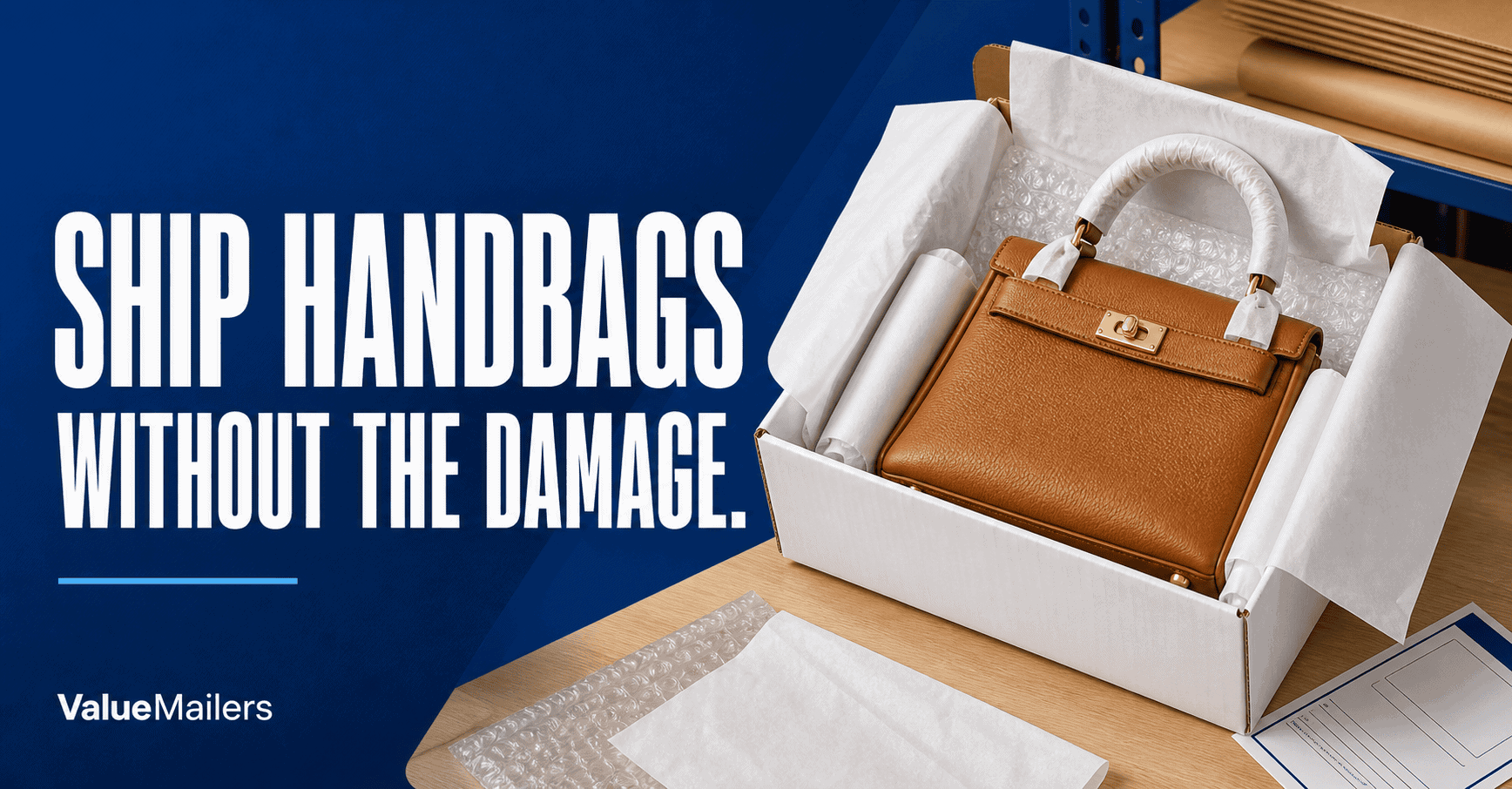
Use clean, unprinted tissue paper to gently fill the main compartment. Add enough to support sides and prevent a structured bag from collapsing, but do not force fill into the corners or stretch the leather, fabric, or seams.
For bags with removable straps, place the strap inside the bag only if it will not press against or mark the lining. Otherwise, wrap the strap separately and lay it alongside the bag in the box. For chain straps or metal clasps, put a layer of tissue between the hardware and the bag to help prevent rubbing.
3. Wrap the exterior to prevent scuffs and color transfer
Wrap the handbag in tissue paper or place it in its original dust bag if one is included. Use a clean inner bag or protective layer when moisture exposure is a concern. Avoid putting tape directly on a handbag, dust bag, or retail box.
Take extra care with light-colored leather, patent finishes, suede, embellishments, and metallic hardware. Printed tissue, colored paper, or rough recycled fill can create transfer or abrasion risks when a package becomes damp or shifts during shipping.
4. Choose a mailer only for truly low-risk bags
Poly mailers are a sensible choice for flat, flexible, non-fragile bags such as fabric totes, simple pouches, and unstructured nylon accessories. The item should fit comfortably with a small amount of room for its protective layer; do not fold a bag against its intended shape just to use a smaller mailer.
If the bag has a rigid base, delicate hardware, a presentation box, or resale value that would make a dent costly, move up to a corrugated box. A mailer protects from moisture and keeps parcel weight down, but it does not provide meaningful crush resistance.
5. Box structured and high-value handbags
For most leather handbags, satchels, backpacks, and designer purses, place the wrapped bag in a clean corrugated shipping box. Use a size that leaves a modest, even gap around the bag. Fill that gap with tissue or suitable cushioning so the bag cannot slide from side to side.
Protect corners and hardware first, then fill void space. Do not let a clasp, buckle, zipper pull, or chain touch the box wall. If the bag ships in a branded retail box, protect that retail box inside a second shipping box; the retail box alone is not designed to handle carrier sorting systems.
For a polished unboxing experience, white corrugated boxes provide a clean exterior. For everyday inventory, cardboard shipping boxes are a practical, durable choice. In either case, the right fit matters more than the color of the carton.
6. Seal, label, and perform a movement check
Close the box and gently tilt it in several directions. You should not feel the handbag shifting freely. If it moves, reopen the package and add fill rather than relying on a “fragile” marking to solve the problem.
Seal all center and edge seams with shipping tape. Apply the shipping label flat to the largest clean outer surface, keeping the barcode away from seams, corners, and tape wrinkles. For a fuller walkthrough, see the ValueMailers shipping-label placement guide.
When to use a bubble mailer, poly mailer, or box
Choosing packaging is the biggest decision in handbag shipping. Use this rule of thumb:
This same match-the-package-to-the-product approach applies across a shipping operation. A tote may be safe in a poly mailer, while a framed piece needs a box and a collectible vinyl album belongs in purpose-built record mailers. One package style should not be forced onto every order.
Special considerations for designer and luxury handbags
High-value handbags deserve a more deliberate process. Preserve original accessories, authentication materials, dust bags, and care cards as described in the listing, but do not let them slide loose against the bag. Separate hardware with tissue, protect branded retail packaging inside an outer box, and use a shipping service with tracking appropriate to the order’s value.
Before buying postage, review the carrier’s current terms for declared value, signature options, exclusions, and claim documentation. International shipments may also require accurate customs information and have country-specific restrictions. Packaging protects the item; it does not change a carrier’s coverage rules.
Common handbag shipping mistakes to avoid
Using a mailer for a structured bag
Flexible outer packaging is efficient for the right item, but it cannot prevent a hard corner, clasp, or frame from being crushed. If the bag must arrive with its shape intact, use a box.
Leaving straps and hardware loose
Loose metal components can scrape leather, snag fabric, or mark a lining. Wrap and separate them before the bag enters the outer package.
Packing a bag into an oversized carton
Extra empty space lets the item gather speed inside the box. Select a closer-fitting carton and fill any remaining gaps evenly.
Treating a retail box as a shipping box
A branded retail box protects presentation, not necessarily transit. Place it inside a durable outer shipping box with enough cushioning to keep it centered.
Covering the barcode with tape or placing it on a seam
Labels need a smooth, flat surface to scan consistently. Apply them after the carton is fully sealed and keep them clear of folds, corners, and tape overlaps.
A repeatable packaging checklist for handbag sellers
Before handing off a handbag shipment, confirm that you have:
The bottom line: protect the bag, not just the shipment
The best way to ship handbags safely is to pack for the item’s actual risks. Use tissue to protect the finish, support the bag’s shape, isolate hardware, and choose a mailer or box that can handle the journey. When your packaging matches the handbag, you reduce avoidable damage while giving customers a cleaner, more professional delivery experience.
Build a packing station around dependable shipping room supplies so every order has the right level of protection ready to go.