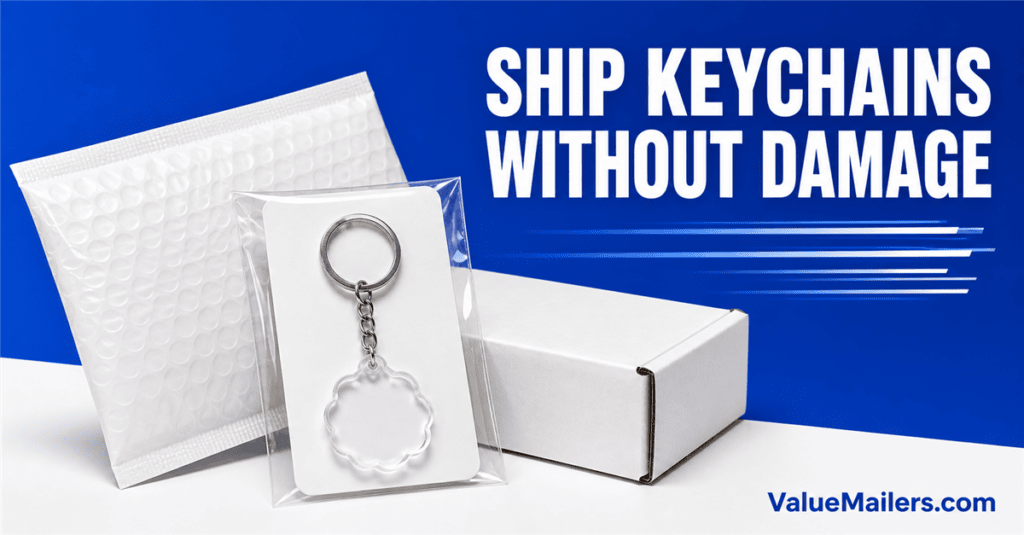
Keychains are small, but they are not automatically easy to ship. A loose key ring can rub against an acrylic charm, a pointed clasp can puncture a thin envelope, and a stacked parcel can crack a delicate piece. The goal is simple: keep each keychain clean, immobilized, cushioned, and protected by a package that matches its actual risk.
For most single, non-fragile keychains, a sleeve, a backing card, and a properly sized padded mailer create a fast, economical packing routine. Upgrade to a corrugated box when an order includes several pieces, hard enamel, glass, ceramic, a display box, or anything that could be crushed. Here is how to ship keychains safely without overpacking every order.
Start by sorting the keychain by risk
Choose packaging after you assess the packed item—not only the charm’s length. Include the ring, chain, clasp, backing card, retail card, and any gift box in your measurement.
- Flexible or durable items: fabric, rubber, silicone, and lightweight plush keychains usually need moisture and scuff protection plus light cushioning.
- Scratch-prone items: acrylic, polished metal, resin, and printed charms benefit from a separate sleeve and a card that keeps hardware from rubbing the face.
- Fragile or heavy items: glass, ceramic, stone, thick metal, and multi-piece sets need a rigid box with cushioning on every side.
- Retail presentation: a boxed or carded keychain should be secured so the packaging arrives as neatly as the product itself.
The cheapest mailer is only economical when it protects the order. A replacement, refund, or damaged-review cycle costs more than choosing the next level of protection when the item calls for it.
Supplies for packing keychains
Build a compact station around a few reliable shipping supplies:
- small clear sleeves or bags for dust and moisture protection
- backing cards or corrugated inserts
- light cushioning, such as tissue or bubble
- tape for securing loose rings or chains
- a mailer or box sized for the finished pack
- a readable Shipping Labels supply
For orders that need padding, Bubble Mailers combine a light outer package with built-in cushioning. A moisture-resistant Poly Bubble Mailer is a practical daily option for many small retail orders. For an individual wrapped item before it goes into a mailer or box, self-sealing Bubble Pouches—also commonly called Bubble Out Bags—make it easier to keep pieces separate.
How to package a keychain for shipping: step by step
1. Inspect and photograph the item
Before packing, check the charm, print surface, ring, clasp, and any stones or moving parts. For higher-value or limited-edition orders, take a quick condition photo for your records. It helps you catch a defect before it reaches the customer and gives you a consistent fulfillment check.
2. Separate metal hardware from the charm
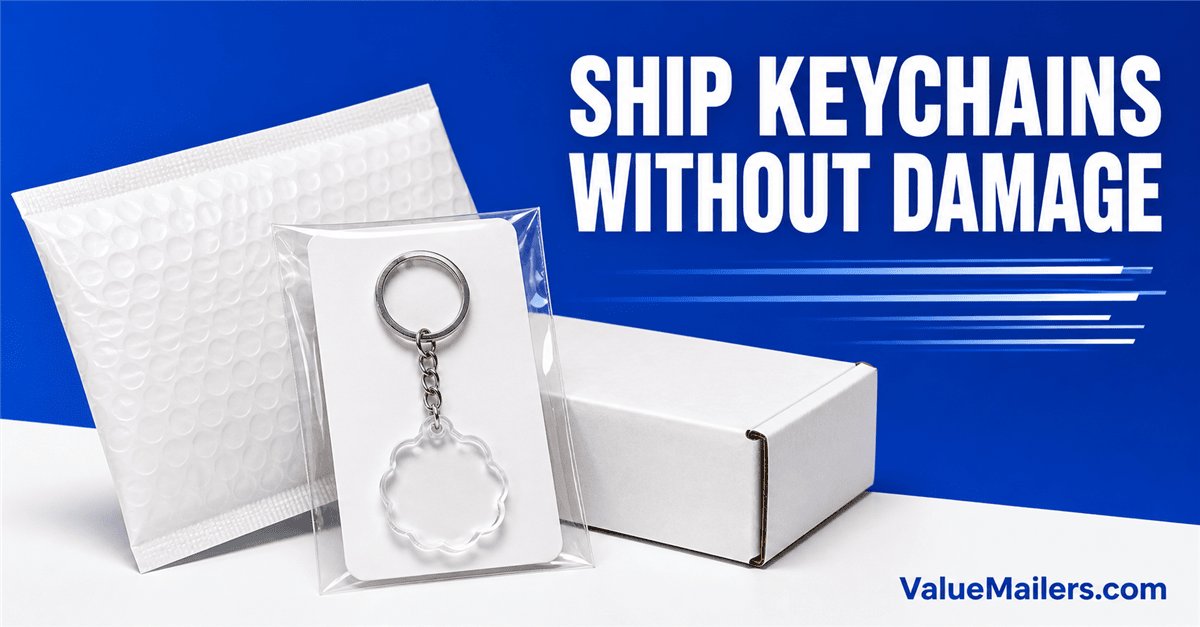
Place the keychain in a clear sleeve. If the ring, chain, or clasp can swing across the charm, gently tape it to the back of a backing card or position it behind a tissue layer. Do not tape directly to a delicate print, acrylic face, or coated surface.
For multiple keychains, sleeve each one separately. Letting several metal rings move together is an easy way to create scratches and dents.
3. Add a backing card and light cushioning
Slide a card behind a flat charm. The card improves presentation and helps prevent bending. Wrap scratch-prone pieces in a small layer of Packing Tissue Paper before adding cushioning.
Use enough padding to stop movement, not enough to force the mailer open. Acrylic and resin keychains often do well with a sleeve, backing card, and one snug layer of bubble. A small hard object should never be able to press directly against the outside of its mailer.
4. Choose the package that matches the order
Use this quick guide after the keychain is sleeved and protected.
| Order type | Best packaging move | Why it works |
|---|---|---|
| One flexible keychain | Sleeve, backing card, padded mailer | Adds scuff and impact protection without excess weight. |
| Acrylic or printed charm | Sleeve, secured hardware, bubble mailer | Limits rubbing and minor transit impacts. |
| Several keychains or a gift set | Separate sleeves, pouch, corrugated mailer box | Prevents pieces from colliding and keeps the order structured. |
| Glass, ceramic, stone, or heavy metal | Cushioned inner wrap plus sturdy corrugated box | Provides crush resistance and space for protective fill. |
For gift-ready single orders or small bundles, White Corrugated Mailer Boxes provide a polished, structured option. Browse White Corrugated Boxes when a keychain is too fragile, heavy, or presentation-sensitive for a flexible mailer. A compact White Corrugated Shipping Boxes format is especially useful for a small boxed set, provided the product fits without empty space.
5. Eliminate motion before sealing
Put the protected item in the smallest package that closes without pressure. Gently shake the closed package. If you can feel or hear the keychain moving, add a small amount of cushioning or move to a better-fitting size. If the package bulges or closure is stressed, choose the next size up or use a box.
This step matters for every order, but especially for bundles. The contents should not be able to build momentum and strike the package walls.
6. Seal, label, and perform a final check
Close the mailer completely and reinforce it with tape when the order is unusually heavy or the trip will be demanding. Apply the shipping label to the largest flat exterior panel; avoid placing it across folds, seams, or wrinkled areas. Confirm the label barcode lies flat and remains fully readable.
Then verify the address, order count, and package weight. Carrier services, size limits, tracking options, and compensation rules change, so check the carrier’s current requirements before you buy postage—particularly for expensive, international, or fragile shipments.
When a box is better than a padded mailer
Bubble mailers are efficient, but built-in padding does not make a flexible package crush-proof. Move to a corrugated box when any of these are true:
- the keychain includes brittle material or a prominent stone
- the order contains multiple metal pieces that could collide
- the item ships in a branded gift box you want to preserve
- the packed order is thick, uneven, or heavy for its footprint
- a customer has purchased a collector set, display item, or add-on product
Choose the smallest box that leaves room for protective fill around the item. Fill voids so the contents stay centered. For a cleaner unboxing experience, wrap the item before adding it to the box; do not use a large box as a substitute for internal cushioning.
Avoid these common keychain-shipping mistakes
Sending a loose charm in a plain envelope. The ring or clasp can press through the paper, and an acrylic charm can arrive scratched. Sleeve and cushion it first.
Packing several keychains together. Separate pieces into individual sleeves or pouches. This keeps hardware from damaging neighboring items.
Using an oversized box without fill. A big box adds cost and lets the item gain momentum. Use a closer fit and fill any remaining voids.
Making the package too thin for a hard object. A padded mailer is not the right answer for every keychain. Upgrade to corrugated protection when the item can crack or be crushed.
Choosing a package by product category instead of dimensions. Product-specific mailers are useful when the item matches their format; for example, Record Mailers are sized for vinyl and other large flat items, not a substitute for a compact keychain package. Measure the protected order and choose the package around that finished size.
A repeatable packing rule for ecommerce sellers
Once you find a setup that works, document it in your fulfillment notes. For example: “Standard acrylic keychain: sleeve + card + one bubble layer + #000 or #00 mailer,” or “Three-piece metal set: individual pouches + 4 × 4 × 2 corrugated box + tissue fill.” Test the completed package with a short drop and shake check before standardizing it.
That small rule turns keychain packaging from a one-off decision into a faster, more consistent ecommerce workflow. It also makes training easier as order volume grows.
Frequently asked questions
Can I ship a keychain in a bubble mailer?
Yes, many single keychains ship well in a properly sized bubble mailer when they are sleeved, their hardware is secured, and the item is not fragile or overly heavy. Use a box for crush-prone materials, multi-item orders, or retail gift packaging.
How do I protect acrylic keychains from scratches?
Place each charm in a clean sleeve, keep rings and clasps from touching the printed face, add a backing card, and use light cushioning. Never pack multiple acrylic charms loose together.
Should I use a poly or kraft bubble mailer for keychains?
Either can work. Poly bubble mailers are useful when moisture resistance and a lightweight exterior are priorities. Kraft bubble mailers offer a paper exterior and a more traditional presentation. In either case, package selection should follow the keychain’s weight, fragility, and packed dimensions.
How should I ship multiple keychains in one order?
Sleeve each piece separately, protect individual hardware, and use a corrugated box if the group can move, collide, or be crushed in a flexible mailer. Fill empty space until the bundle stays still.
Pack small products with confidence
The best way to ship keychains safely is to layer protection: sleeve the item, separate the hardware, add the right amount of cushioning, and select a mailer or box that leaves no room for damaging movement. With a consistent packing rule and dependable packaging supplies, even small orders can arrive clean, secure, and ready to delight the customer.