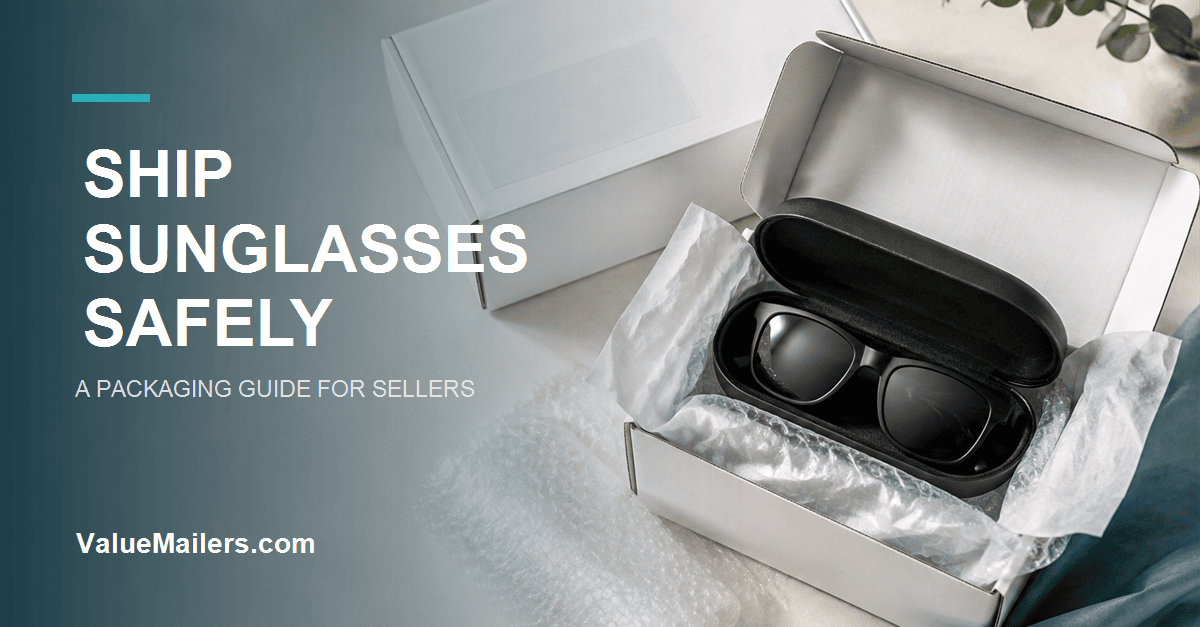
Selling sunglasses online is deceptively simple—until a pair arrives with scratched lenses, a bent temple, or a cracked frame. Sunglasses are lightweight, but they are not automatically safe to mail. Their lenses can rub against a case or another pair, their hinges can flex, and a soft package can be crushed during transit.
The dependable approach is straightforward: protect the lenses first, stop the frame from moving, then give the order a rigid outer shell. This guide explains how to ship sunglasses safely, whether you are sending a single everyday pair, a vintage collectible, or a higher-value designer order.
What you need to ship sunglasses safely
Set up a simple packing station with these supplies:
- A clean microfiber cloth, soft pouch, or lens-safe tissue
- A hard sunglasses case when available
- Protective Bubble Pouches or cushioning material
- Small White Corrugated Boxes sized close to the packed case
- Compact White Corrugated Shipping Boxes for a single pair that needs dependable crush protection
- Void fill, such as crumpled packing paper, for any remaining space
- Strong packing tape and clear Shipping Labels
For most single-pair orders, the hard case and corrugated box do the essential structural work. A pouch or tissue layer protects the lenses from surface contact; the box protects the frame from compression and impact.
Start with a quick inspection
Before packing, check the item under good light. Wipe the lenses with a clean microfiber cloth, inspect the hinges, and photograph the pair if it is vintage, limited edition, prescription-free designer eyewear, or otherwise high value. Close the temples gently and make sure loose screws or decorative pieces are secure.
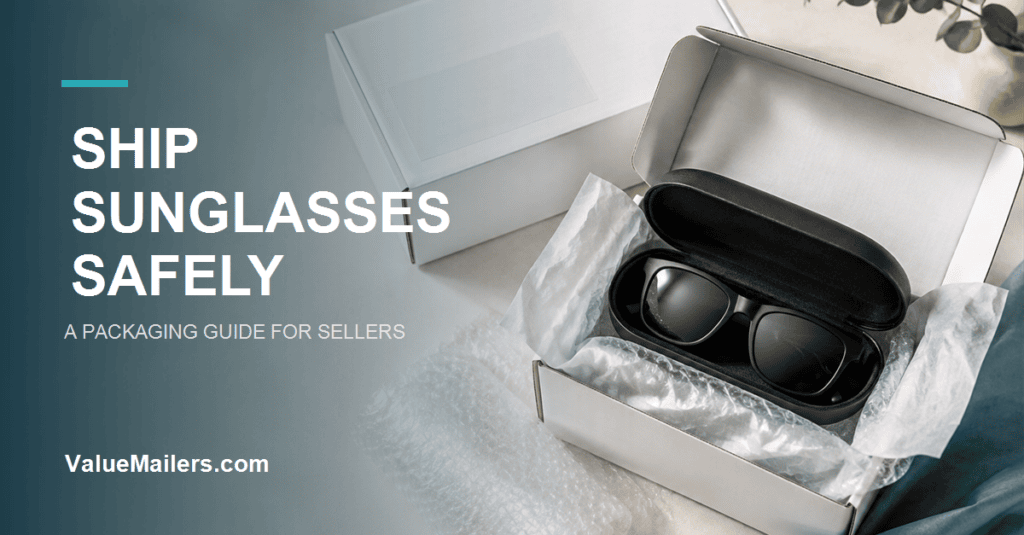
If the sunglasses include an original hard case, use it. The case is designed to hold the frame in position and is usually the best first layer of protection. If there is no case, create a soft inner layer around the lenses and bridge, then use a padded pouch before the sunglasses go into a box.
How to package sunglasses for shipping: step by step
1. Keep the lenses from rubbing
Place a clean microfiber cloth over the lenses, or use a layer of soft, acid-free Packing Tissue Paper. Do not use newspaper, rough paper, or adhesive directly on the frame. The purpose is to keep lenses, temples, and hardware from scraping against one another while the package moves.
For polarized, mirrored, or coated lenses, this small step is especially valuable. The cushioning layer should be snug enough to stay in place but never tight enough to press the frame out of shape.
2. Use a hard case whenever possible
Put the protected sunglasses in their hard case and close it. If the case has too much empty space, add a small amount of tissue around—not on top of—the frame so it cannot rattle. A soft pouch alone protects against dust and light scuffs; it does not provide meaningful crush protection.
No hard case? Place the wrapped pair in self-seal Bubble Out Bags or another protective bubble pouch, then use a corrugated box. Keep the pouch’s seal away from delicate lenses and make sure there is no exposed adhesive that can contact the product.
3. Choose a box with room for cushioning, not movement
Select a box that is slightly larger than the packed case or pouch. White Corrugated Mailer Boxes are a practical choice for small retail orders because their rigid walls help resist compression while presenting a clean, professional exterior.
Line the bottom with a thin cushion layer, center the case, then fill all open space. The goal is not a large amount of material; it is a firm, no-shift fit. After sealing the box, gently shake it. If you can hear or feel the sunglasses move, reopen it and add void fill.
4. Match the protection level to the order
Use this quick decision guide:
| Order type | Recommended inner protection | Recommended outer package |
|---|---|---|
| Everyday pair with a hard case | Microfiber cloth plus case | Right-sized small corrugated mailer box |
| Pair without a case | Tissue plus bubble pouch | Corrugated box with void fill |
| Designer, vintage, or fragile frame | Cloth, hard case, and extra cushion layer | Snug corrugated box; consider a second box for longer routes |
| Multiple pairs | Individually protected cases or pouches | Larger shipping box with dividers or separated layers |
5. Seal, label, and document higher-value orders
Tape every opening securely. Apply the address label to a clean, flat surface and keep it clear of box seams. For designer sunglasses, choose a service with tracking and consider insurance based on the item’s value and the carrier’s terms. Retain the packing photos, especially for resale-platform orders where condition documentation can help resolve a claim.
Are bubble mailers safe for sunglasses?
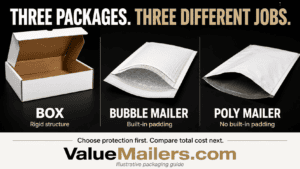
Usually, not by themselves. Bubble Mailers add helpful cushioning and can be useful as an outer moisture-resistant layer around a small boxed order. However, a bubble mailer does not reliably prevent a pair of sunglasses from being crushed or bent under heavier parcels.
For a boxed pair, a Poly Bubble Mailer may be reasonable when the box fits comfortably and you want a lightweight outer layer. Do not place an unprotected pair directly into a padded envelope simply because it fits. The savings are small compared with the cost of a damage claim or return.
How to ship designer sunglasses
High-value sunglasses deserve a slightly more deliberate process:
1. Photograph the lenses, hinges, serial markings, accessories, and packaging before sealing. 2. Use the original hard case when possible, with a lens-safe cloth inside. 3. Center the case in a rigid box and remove all movement with void fill. 4. Consider double-boxing for international shipments or long, multi-carrier routes. 5. Use tracked service and select insurance only after reviewing the carrier’s coverage rules and any marketplace requirements.
Avoid writing the brand name or item value prominently on the exterior. A normal address label and neutral outer package are generally the better choice.
Common mistakes that lead to damaged sunglasses
Shipping in only a soft pouch
A pouch prevents surface scuffs, but it has almost no resistance to compression. Always add a rigid box around an unboxed pair.
Using an oversized box
More space means more momentum. If the case can slide from side to side, the frame can take repeated impacts. Use a closer-fitting box and fill any remaining gaps.
Letting multiple pairs touch
Frames, hinges, and lenses should never sit loose together. Protect each pair separately, then divide or cushion the pairs inside the outer box.
Treating a fragile sticker as protection
A label may provide a handling cue, but it does not replace packaging built to withstand ordinary conveyor, stacking, and delivery handling.
A note on mailers for flat products
Choose mailers based on the item’s physical needs, not just its weight. For example, Record Mailers are purpose-built for keeping vinyl records flat and protected, while sunglasses need three-dimensional crush resistance around their case or padded pouch. The right format reduces both wasted material and preventable damage.
Final sunglasses shipping checklist
Before handing the package to a carrier, confirm that:
- Lenses are separated from abrasive surfaces.
- The sunglasses are in a hard case or protective pouch.
- A rigid corrugated box surrounds the item.
- There is no movement when the sealed package is gently shaken.
- The box is completely taped and the shipping label is readable.
- Higher-value orders have condition photos, tracking, and the appropriate service level.
When you package sunglasses in layers—lens protection, a stable inner container, and a right-sized corrugated box—you give each order a far better chance of arriving ready to wear. Keeping dependable packaging supplies at the packing station makes that repeatable as order volume grows.