Shipping label mistakes can undermine an otherwise well-packed order. The box can be strong. The cushioning can be correct. The product can be exactly what the customer ordered. Yet a poor shipping label can still create trouble.
For a small business, label quality belongs in the packing process—not in a separate “the printer handles that” category. A useful final check covers three things: can the label be read, does it belong to this order, and is the parcel ready for the carrier?
Start with the order, not the printer
Before printing, confirm the recipient, delivery address, service, and package count in your shipping software. Watch for two open orders with the same customer name. Also check whether a customer requested an address change after the original order arrived.
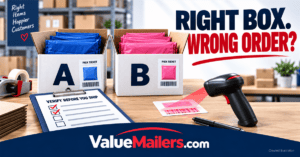
Next, keep one order and its label together. If you print a batch, use a clear matching process rather than assuming that the parcels remained in the same order as the print queue. An excellent barcode on the wrong box is still the wrong shipment.
Catch shipping label mistakes before applying the label
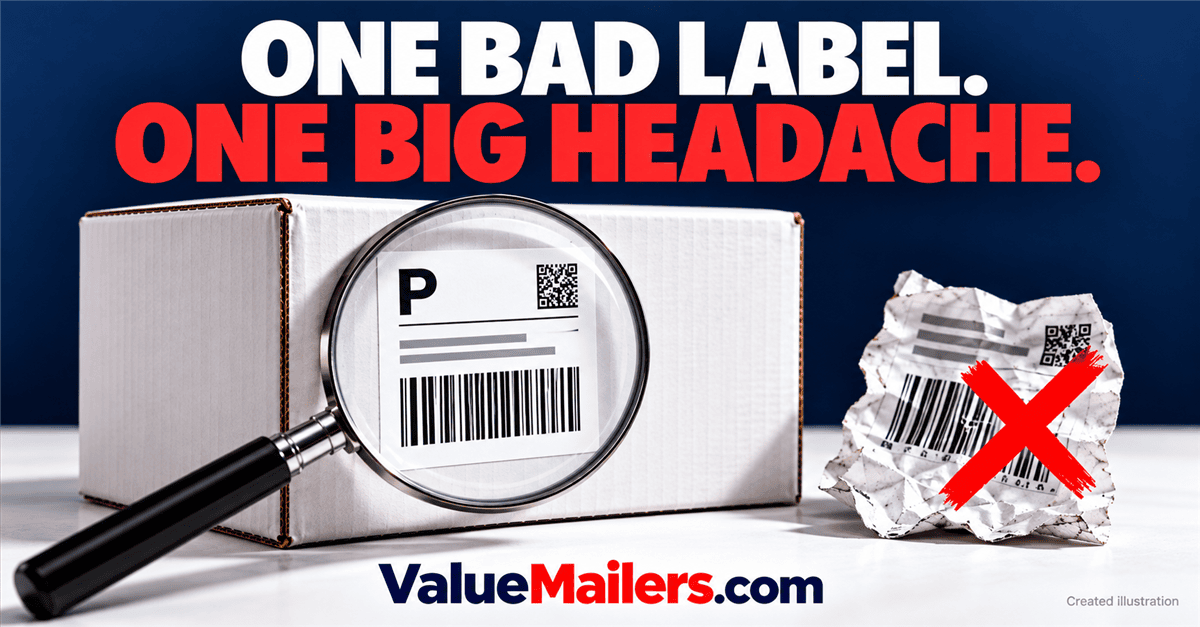
For example, check for faded print, missing sections, clipped edges, and wrong scaling. A preview on a computer screen is not proof that the physical label printed correctly.
In addition, use the printer settings and label stock specified for your equipment. If the output is poor, correct the cause before printing the whole batch. Save a screenshot of the problem for troubleshooting, but avoid exposing customer information in public support requests.
A scan with your own equipment can be a useful internal check. It is not a guarantee that every carrier system will read the label or accept the parcel.
Avoid shipping label mistakes on uneven surfaces
USPS advises placing a label parallel to the package’s longest side, without bending it over edges or overlapping labels. Review the instructions for your own carrier and label format before shipment. Source: USPS package preparation.
For a flexible mailer, inspect the label after the contents are inside and the flap is closed. A surface that was smooth while empty may wrinkle around a bulky item. Do not stretch the package simply to make a label fit.
A checklist to prevent shipping label mistakes
| Check | Question before release |
|---|---|
| Match | Does this label belong to this exact order? |
| Are the address and barcode complete and clear? | |
| Placement | Is the label flat and unobstructed? |
| Old markings | Could an old shipping label cause confusion? |
| Handoff | Is this parcel going into the correct carrier collection? |
Finally, add the check where it will actually happen: beside the printer or at the last packing position. Assign an owner instead of assuming somebody else inspected the label.
Separate “label created” from “parcel handed over”
In short, treat a purchased label as a preparation step. Keep a separate internal record of which parcels went into a pickup or drop-off. If a shipment appears to have no tracking movement, compare your handoff records with the carrier’s tracking before telling a customer what happened.
To prevent shipping label mistakes, build in a consistent final check. The useful improvement is not another long checklist. It is a consistent last look at the physical package and its matching order.
Supplies that support the process
Choose compatible shipping labels and packaging that leaves a practical label surface. Review sizes and specifications rather than choosing by appearance alone.
Explore suitable packing supplies
Compare white corrugated boxes for your product size and load. For compact presentations, review white corrugated mailer boxes; for outer packaging, review white corrugated shipping boxes. Check each product’s actual specifications.
Browse Bubble Mailers, Bubble Pouches, and Bubble out bags for appropriate applications. Padded packaging is not a substitute for the rigid protection a fragile item may require.