Picture the email arriving while you’re packing another 30 holiday orders.
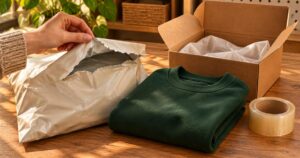
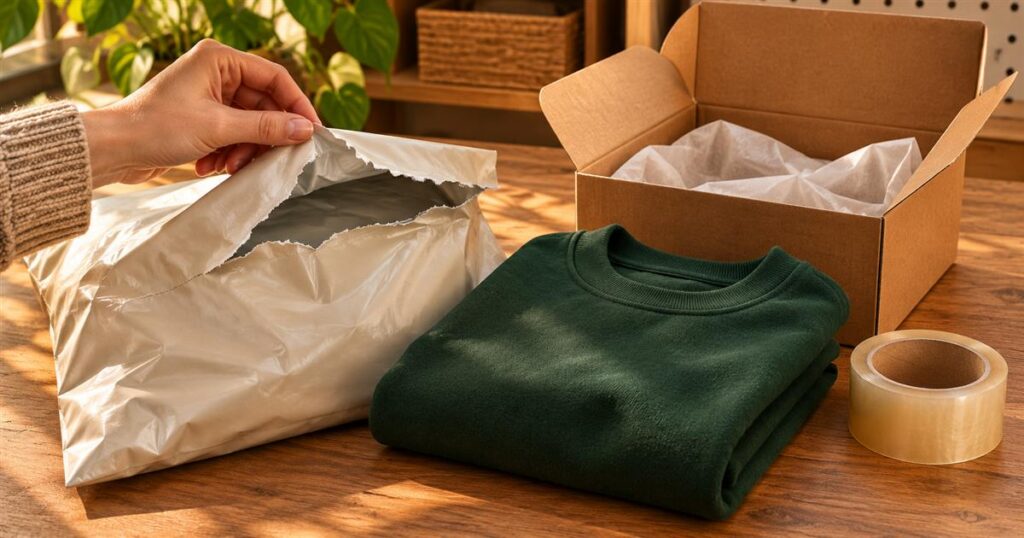
“I love the sweatshirt. Can I get a medium instead? Also, I tore the bag open. What do I send it back in?”
You can send a return label in seconds. The customer still needs something to stick it on.
In 2025, retailers surveyed by the National Retail Federation and Happy Returns expected 17% of holiday sales to be returned. For a small shop, even a few exchanges can mean a stack of emails, replacement shipments, and inventory waiting to come back. These shipping and packaging tips start with the package you’re already sending. NRF and Happy Returns’ 2025 report
Open a package the way your customer would
Take a bestselling item off the shelf and pack it exactly as you would for a real order. Add the tissue, thank-you card, and shipping label. Then give it to someone who’s never seen how you pack it.
Watch where they reach first. Do they tear straight through the flap? Does the label bridge the seam they need to open? Once the item is out, can they put it back and seal the package securely?
If they reach for scissors and cut through the only usable flap, try moving the label onto a flat surface away from the opening. For items that get exchanged often, consider a mailer with a tear strip and a second seal. Then have someone open that version, too.
Choose packaging for the product’s trip back
A sweatshirt can handle a trip in a flexible bag. A ceramic mug needs a rigid carton and cushioning. On the way back, your customer has to recreate whatever protection you built at the packing table.
- T-shirts and sweatshirts. Use a poly mailer with enough room to close securely. Customers can reuse an intact bag that can be sealed or use another sturdy mailer if it tore.
- Small, durable accessories. Use a bubble mailer when light cushioning is enough. Ask customers to use a fresh padded mailer if the original split or lost its padding.
- Fragile goods and gift sets. Use a white corrugated box or brown shipping carton with space for cushioning. Ask customers to use a sturdy carton, wrap the item again, and tape the seams.
If an item sits between two options, use our guide to choosing a box, bubble mailer, or poly mailer.
Five fixes that save a second email
- Protect the retail box you’ll need to resell. Put the original shoe box, collectible box, or gift packaging inside a shipping carton. Tell the customer to do the same on the way back. A return label stuck to the retail box can leave a mark when you peel it off.
- Show where the cushioning goes. Add a packing photo to the return instructions for mugs and other fragile items. Show where to place the bubble cushioning, how to protect the handle, and how to fill gaps so the item stays put. Ask for a sturdy replacement if the original carton is crushed.
- Check the replacement package before drop-off. A sweatshirt that went out in a mailer may come back in a much larger box. If the package changes substantially, ask for the sealed dimensions and weight so you can check the label. Our USPS dimensional weight example shows why the outside measurements matter.
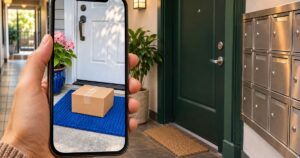
- Make drop-off instructions specific. Name the carrier and tell the customer whether to print a label. If your return service offers a QR code, explain where it can be scanned. Ask the customer to keep their receipt until the exchange is complete.
- Make the return easy to identify. Ask the customer to put the order or return number inside the package. Your team can match the return if the outer label gets torn or the order paperwork goes missing.
For a reused carton, remove old labels and any markings that no longer apply. Put the new shipping label flat where it can be scanned, and seal the box with carton-sealing tape. UPS return packaging guidance
Write the reply before you need it
Put the packing directions in your exchange email, where the customer will still have them after the box is gone. Here’s a short version for a boxed item.
If your original box is still sturdy, you can reuse it. If it’s torn or crushed, use a sturdy box of a similar size. Cushion the item so it can’t shift, tape the box shut, and remove any old shipping labels. Put your order number inside. If the replacement box is much larger, reply before dropping it off so we can check the return label.
Let the returns tell you what to fix
When a return comes back, note why the customer sent it and what condition it arrived in. A size exchange in a torn mailer points to a different fix than a chipped mug in an intact carton. If the same item keeps coming back with the same damage, repack one at the bench. Look for the spot where it can move, rub, or take an impact.
Start with the product customers exchange most often. Pack one, open it, and try to send it back with what a customer would have at home. If you get stuck, you’ve found the part of the package or exchange email to fix before the holiday rush.